EBCfromsalleri

Everest Base Camp Trek via Salleri - 18 Days

Key Infomation

  • Duration:18 Days
  • Trip GradeStrenuous
  • DestinationTIA Kathmandu
  • Max Altitude5,545 m
  • ActivityTrekking, Sightseeing & Hiking
  • Group SizeMax 15 Person
based on 4 reviews
Classical Trek
Price fromUS$1,590US$1,700
Group Price Available
peoplePrice
1 person - 1 personUS$ 1690
2 people - 4 peopleUS$ 1590
5 people - 10 peopleUS$ 1520
11 people - 15 peopleUS$ 1450
  • Best Price Gurantee
  • No booking or Credit Card Fee
  • Free Cancellation

Everest Base Camp Trek via Salleri Overview 

The Everest Base Camp trek via Salleri is a great alternative for trekkers who want to avoid the crowds and unpredictable flight to Lukla airport. Rather than taking a flight, travelers take a road trip to Salleri from Kathmandu, which is an affordable and less crowded option to Everest Base Camp. This is the route you want to take if you're wanting to do an Everest trek without flying, while experiencing a little more of Nepal's local culture and scenery along the way.

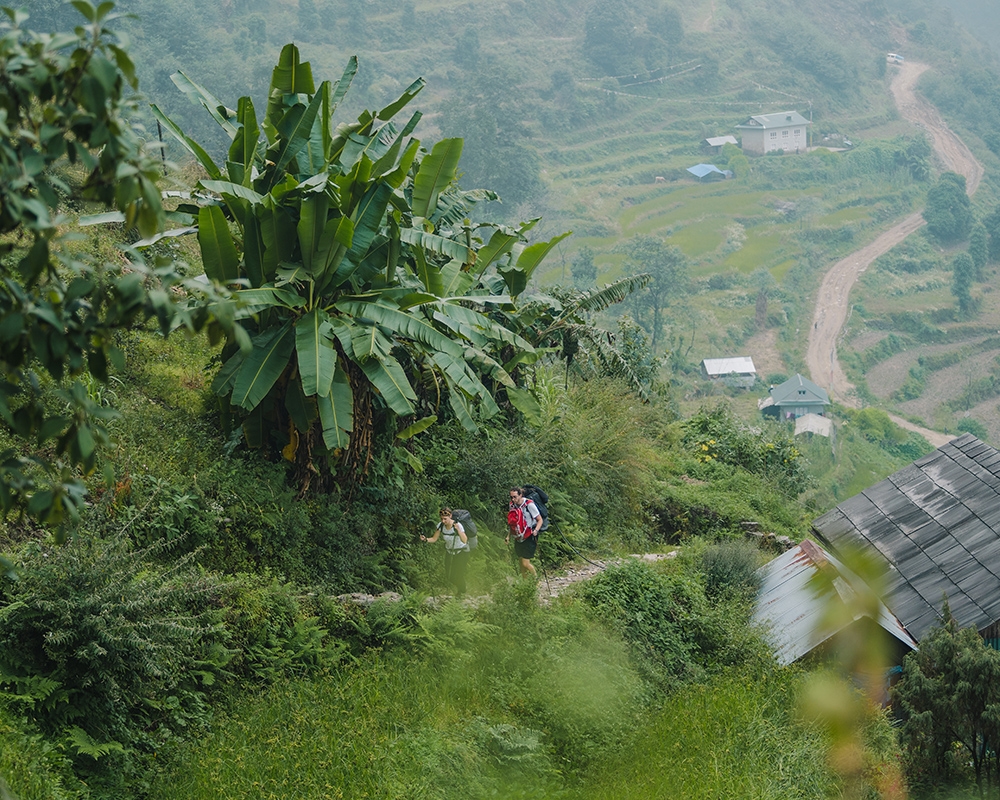
After departing Kathmandu, you'll take an 8–9-hour road drive before you arrive at Salleri in the Solukhumbu region, where the trek starts. Yes, it takes a while to get there, but you'll have the opportunity to take in some stunning views of hills, rivers, and traditional villages along the way. The actual trek from Salleri will continue through some charming villages such as Taksindo, Paiya, and Surke, as you explore a different trek, which has not been traveled by many tourists.

There are many trekkers who choose the Everest Base Camp trek via Salleri because it's a budget Everest trek option. The road travel cuts down the costs associated with taking a flight to Lukla. Along the trail, you will have the opportunity to cross rivers, hike through dense, lush forests, travel along ridgelines, and enjoy the stunning views of mountains. After crossing the Sunkoshi River, you’ll enter the Okhaldhunga district, where you'll have some spectacular sights of Numbur Himal, Mt. Everest, Mt. Lhotse, and other mountain peaks you will see along the trek.

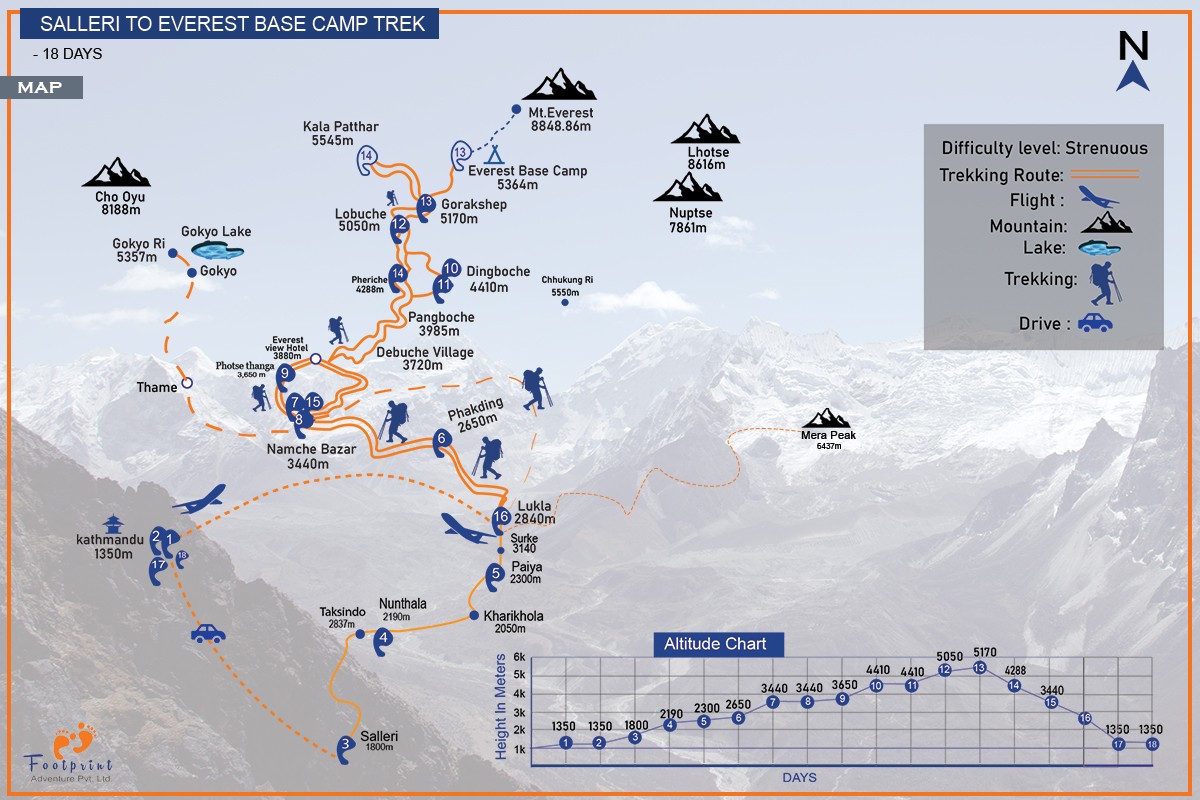
Continuing to Taksindo, we drive to Kharikhola and then trek to Ringmo Village. The route to Everest Base Camp is about 130 kilometers and takes approximately 18–19 days, depending on walking pace. From Ringmo, you will go through Paiya, Surke, and Phakding until you arrive at Namche Bazaar, the major gateway for most trekkers heading for Everest Base Camp.

As you trek, you will pass through beautiful rhododendron forests, cross suspension bridges, and take in stunning views of the Himalayas. The Salleri route to Everest Base Camp is a longer and more strenuous trek than the more well-known Lukla route because there is much more uphill and downhill terrain on this route. Trekkers should be prepared for the physical challenge of the Salleri route and be cautious of altitude sickness at high elevations.

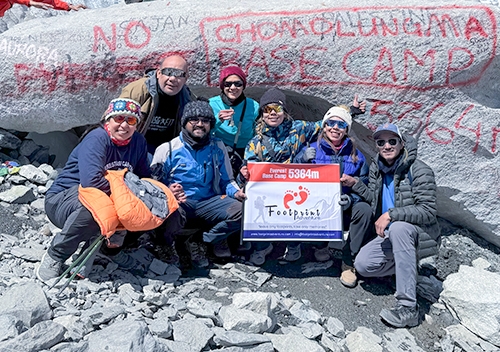
The best part of the trek is reaching Everest Base Camp at 5,364 meters (17,598 feet), where climbers prepare to summit the highest mountain in the world. Trekkers will also climb Kala Patthar, which is a famous viewpoint where you have a panoramic view of Mt. Everest and other surrounding peaks. In general, Trekking to Everest Base Camp through the Salleri route is a great option for trekkers who are looking for a more off-the-beaten-path adventure but do not wish to sacrifice the opportunity to take in the splendor and grandeur of the Everest region. Here is a guidebook for you in case you are traveling to Nepal for the first time.

Highlights of Everest Base Camp Trek Via Salleri

  • Explore UNESCO World Heritage Sites such as Pashupatinath Temple, Swayambhunath Stupa, Boudhanath Stupa, and Patan Durbar Square.
  • Luxurious accommodation and services in Kathmandu
  • Private and Comfortable drive to Salleri
  • Experience the least explored and least crowded route to the Everest Base Camp
  • Explore the unexplored beauty of the region in its natural form
  • Acclimatization in the famous Sherpa capital - Namche Bazaar
  • Trekking to the world’s famous base camp and exploring the Khumbu region from the closest distance
  • Hiking to the world’s most popular viewpoint, Kala Patthar Viewpoint, and exploring the 360-degree panoramic views of the highest mountains like Mt. Everest, Mt. Nuptse, Mt. Ama Dablam, and so on.
  • Experience the unique lifestyle and diverse culture of the Sherpa Community.
  • Scenic flight back from Lukla to Kathmandu
  • Cultural and Farewell dinner in Kathmandu

Major Highlights of Everest Base Camp Trek via Salleri 

Scenic Overland Journey 

The Everest Base Camp trek via Salleri offers an adventurous road journey. You will begin by traveling overland from Kathmandu to Salleri, which will take approximately 8–10 hours. The long drive is an experience in itself, providing you with breathtaking views of Nepal’s countryside. Along the way, you will view green hills, terraced farms, dense forests, and rivers like the Sun Koshi and Dudh Koshi, and get a glimpse of daily life in rural villages. This drive helps you get a feel of the cultural, political, and social landscape of the region extending before your trek begins. This drive also helps you avoid the overwhelming, unpredictable flight delays and cancellations out of Lukla and is therefore a more reliable and often less stressful travel option.

Lesser Crowded Off-Beaten-Path route 

As the Salleri trek route does not involve the route from Lukla to Base Camp, the trails are generally a lot quieter and significantly more solitary. Going through the Solu-Khumbu region encourages each trekker to connect with the local Sherpa people in villages like Nunthala, Bupsa, and Surke, and embrace the famous Sherpa hospitality while you stay in local tea houses and completely immerse yourself in their customs. Spectacular views of mountains will surround you at any time, lots of forests and river crossings, with relatively few trekkers, offer a really peaceful experience. While the teahouse accommodation itself is not that different than trekking along the Everest side near Lukla, the isolation gives you a better chance to breathe and understand the local culture and pristine landscape. The trek is ideal for any individual or group that wishes to embrace the total wilderness of the world’s highest mountain range and enjoy trekking away from the crowd of other trekkers.

Who Should Trek to Everest Base Camp via Salleri?

The Everest Base Camp trek via Salleri is considered a physically demanding journey, having a moderate to a high degree of difficulty. The trek includes steep and rocky terrain and multiple uphill and downhill stretches. Hence, this trek is perfect for budget travelers seeking a challenging off-the-beaten-path adventure in Nepal. Altitude sickness can also be a problem due to the trek's high altitude. The trek requires decent stamina and fitness. Acclimatizing to higher elevations during the trek by spending some days at key points reduces the risk of altitude sickness.

It would be best if you also have durable and comfortable hiking shoes, warm and waterproof clothing, and a suitable backpack for the trek. For more information, check the packing & equipment list for trekking in Nepal. To be sure you're well enough for the trek, consult a doctor before starting. And most importantly, your Travel insurance should cover high-altitude trekking and emergency medical evacuation. For more information, we have a complete guidebook for the EBC trek, or you can directly contact us

How to Prepare Yourself for the Everest Base Camp Trek via Salleri?

The EBC trip through Salleri is a challenging trek that needs a moderate to high level of fitness. Trekkers should be fit enough to climb uphill and downhill for at least 6-7 hours a day. It is advised to start regular exercise and endurance training many months before the walk to help you get ready. Trekkers should have the knowledge to acclimate at greater elevations to avoid altitude sickness. It is highly recommended to acclimate at Namche Bazar and Dingboche. The EBC trip via Salleri offers breathtaking views of the Himalayas and the chance to experience Sherpa culture and hospitality. You can check out the blog on fitness for the EBC trek.

Why Choose Footprint Adventure for Everest Base Camp Trek via Salleri in 2025/2026?

We are a locally-based trekking company with experience in providing trekking services to the Everest Base Camp trek via Salleri and other regions in Nepal. We take care of the transport, permits, accommodation, and overall logistics, so you can focus on trekking. We’ve designed this itinerary to be cost-effective and well-suited for your convenience, from our road travel plan to reducing the long, tiring travel days. The trekking route allows you to experience villages, monasteries, and local culture away from the traditional crowded trails.

Our guides will be there with you on the trek, provide daily briefings, check on your health, and provide information about the Sherpa culture. Footprint Adventure places emphasis on personal care and sustainable and responsible tourism, and works to keep you safe and supported while on our trekking adventure. If you are planning on the Everest Base Camp trek via Salleri in 2025/2026, contact us to develop a smooth, safe, and sustainable trekking experience.

When are the Best seasons for the Everest Base Camp Trek via Salleri?

The best time to do the Salleri route to Everest Base Camp is in spring (March-May) and autumn (September–November). The weather is often calm and dry during these months, with clear skies and great visibility. This creates excellent trekking conditions and enables breathtaking mountain views. In spring, the hills are covered in colorful rhododendron blooms, making the walk even more magnificent. Nonetheless, alpine weather can shift suddenly and unexpectedly. It's always a good idea to check the weather forecast before embarking on your journey and to be prepared for unforeseen weather circumstances.
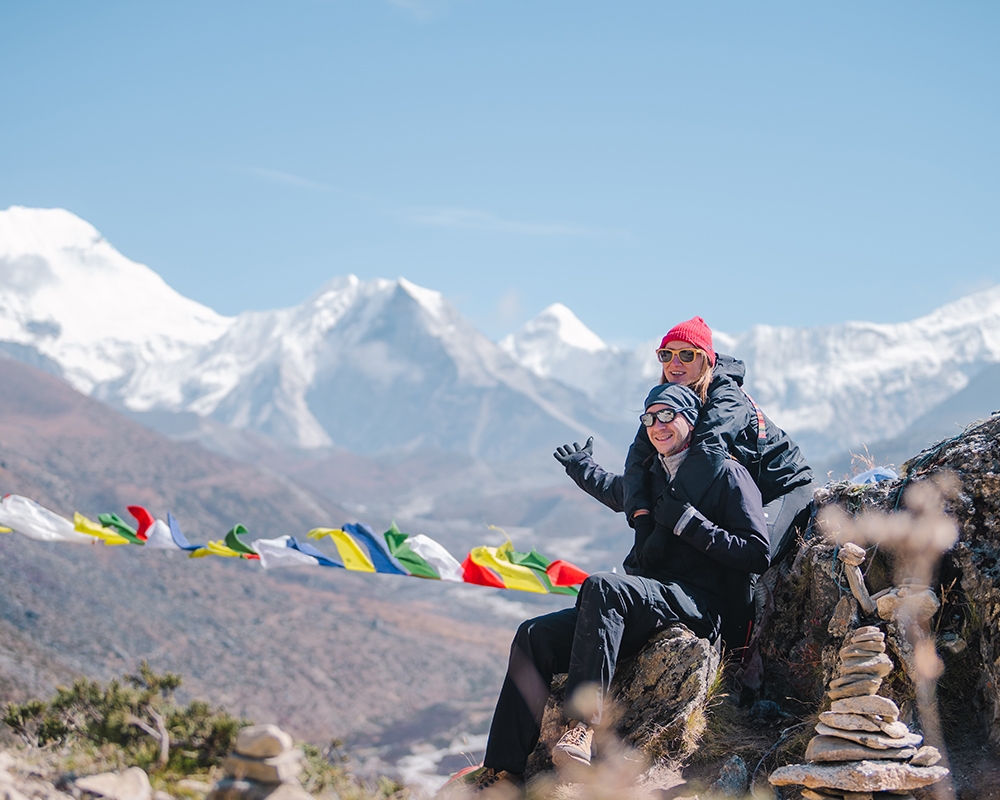
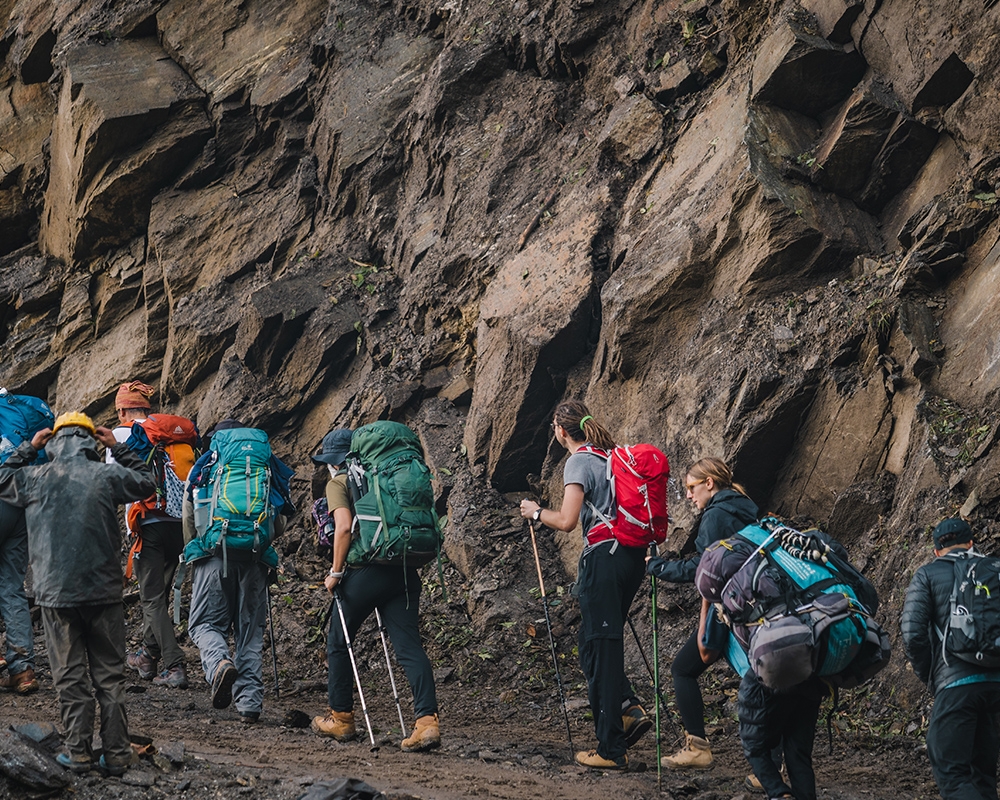
You'll See

Itinerary

Expand AllCollapse All

This is a special itinerary made by our external experts for the Everest Base Trek Via Salleri. We can customize this itinerary according to your needs and requirements. Please do contact us for a customized and tailored itinerary at your convenience. Our expert trip manager and tour advisor will plan and design the itinerary according to your desire.

Our representative will be there at the airport arrival terminal with your name for your warm welcome. After greeting you, our representative will drop you at your hotel and help you with all the check-in work. There will be no activities planned for you. You can take a rest and if you want to explore nearby you can go and explore yourself as well. Overnight at a Hotel in Kathmandu.

  • Accommodation Kantipur Village Hotel
  • Maximum Altitude1,350 m

After breakfast, you will be taken to explore some of the famous landmarks of Kathmandu such as  Boudhanath Stupa, Swyambhunath Stupa, Pashupatinath Temple, and Patan Durbar Square. They all are listed in the UNESCO World Heritage Sites and protected areas as all of them are historically, and culturally rich, and ancient. You will get to explore these heritage sites with our experienced city tour guide. You will get a chance to know about the historical facts, stories, and all the information related to these sites. 

After your amazing whole-day city excursion, you will get back to your hotel. After that, we will go to one Nepali Cultural Restaurant where you will get both delicious Nepali cuisine along with an amazing cultural performance. You will meet your trekking guide who will give you a  short briefing session about your trekking and the guide will basically answer all your queries. Overnight at a Hotel in Kathmandu. 

  • Accommodation Kantipur Village Hotel
  • MealsBreakfast & Welcome Dinner
  • TimeFull Day
  • Maximum Altitude1,350 m

Your first day of trek starts with an 8-9 hours drive from Kathmandu to the Salleri district located in the Solukhumbu region of Nepal. Salleri follows a trail to the picturesque villages of Taksindo, Paiya, and Surke. You will pass through the rivers, forests, and bizarre landscapes to reach Salleri. After crossing the Sunkoshi River, your trek heads towards the Okhaldhunga district of Nepal. Overnight at a comfortable hotel in Salleri.

  • Accommodation Guest House
  • MealsBreakfast, Lunch & Dinner
  • Time8-9 hours drive
  • Maximum Altitude1,800 m

After a delightful breakfast, you will start your off-road mountain drive which the road take you to the beautiful village and traditional village of the Everest Region. It is an uphill trail that passes through the diverse land culture and cultivation. You can get astonishing views of Numbur Himal. Passing through the farmland, you will get to see the influence of the Tibetian Culture and Monasteries on the trekking trail. When you reach the ridge, you will get a small glimpse of the Lukla and Nunthala Village. The trail continues to have a descending part until an alpine forest and you cross the Dudhkoshi River. After you reach Jubing Villahe, Kharikhola is just 2 hours away and overnight stay at Kharikhola.

  • Accommodation Tea House
  • MealsBreakfast, Lunch & Dinner
  • Time6-7 hours drive
  • Maximum Altitude2,250 m

After a comfortable stay at Kharikhola you will need to climb a steep hill for few hours to reach the Bupsa Danda on the trail. The Bupsa Danda is an alluring village that lies at the to of the ridge that offers you the astonishing landscapes of the mountains. At this height above 3,000 m, the air gets frosty and thinner. The area belongs to the high  Khumbu Region where you will enter the Paiya village. The Paiya lies in the middle of the alpine forests and with a small sight of Lukla, you will walk slowly uphill in order to reach the Surke Village. Overnight at at comfortable teahouse at Surke.

  • Accommodation Tea House
  • MealsBreakfast, Lunch & Dinner
  • Time6-7 hours
  • Maximum Altitude2,840 m

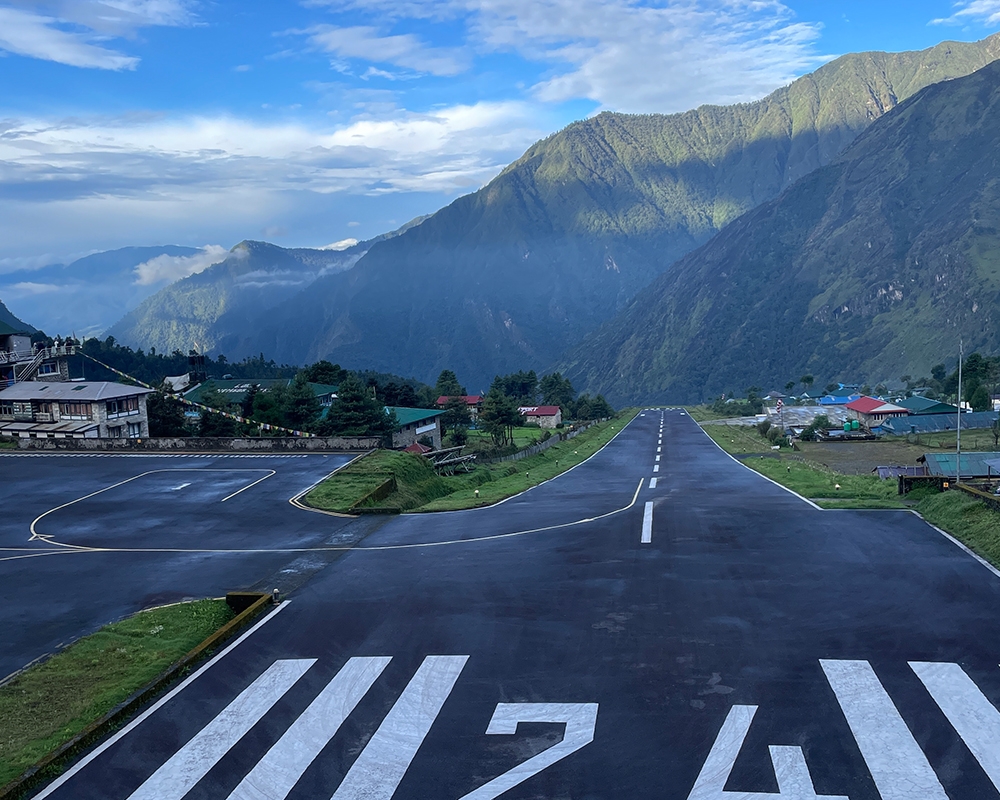
The next day, you will be ascending towards the real adventurous feel as you walk through a glimpse of Lukla to Phakding. You can see people coming back from the trek to Everest and will surely feel eager to reach the foothills of the highest peak in the world. This off-the-beaten-pathway gets busy with all the trekkers, porters, and transporting animals during the peak season. As you pass by the scenic landscapes for around 6-7 hours you shall reach your destination for the day at Phakding. Overnight at a Lodge in beautiful Phakding Village.

  • Accommodation Trekker Lodge & Restaurant
  • MealsBreakfast, Lunch & Dinner
  • Time6-7 Hours
  • Maximum Altitude2,650 m

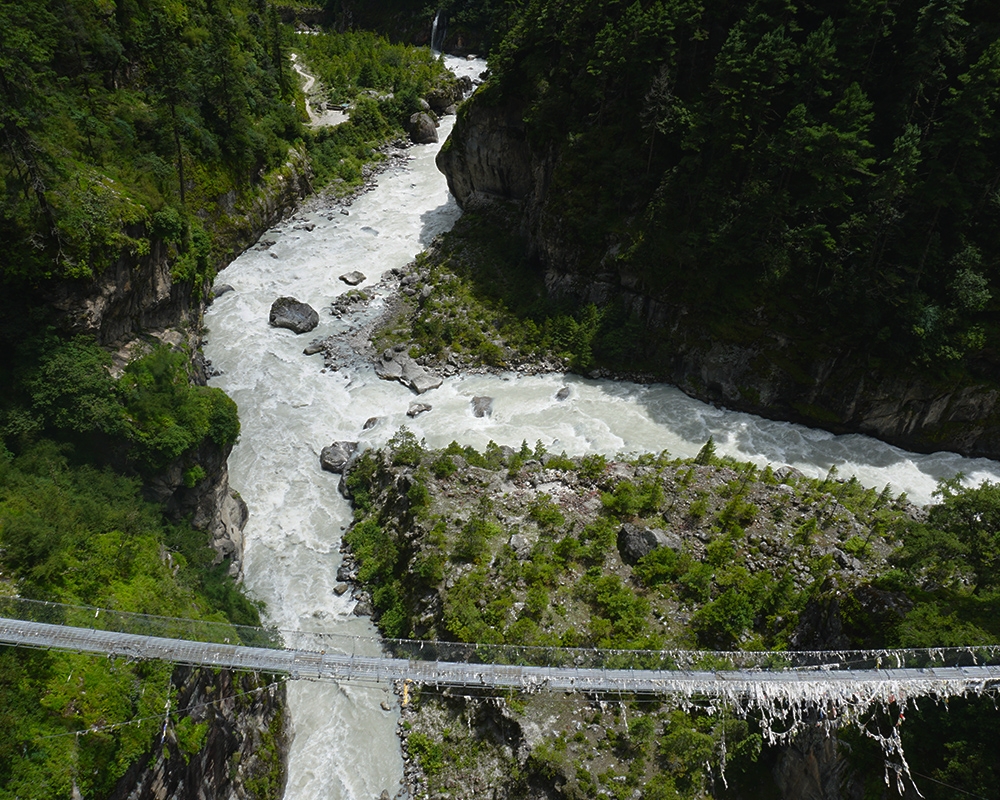
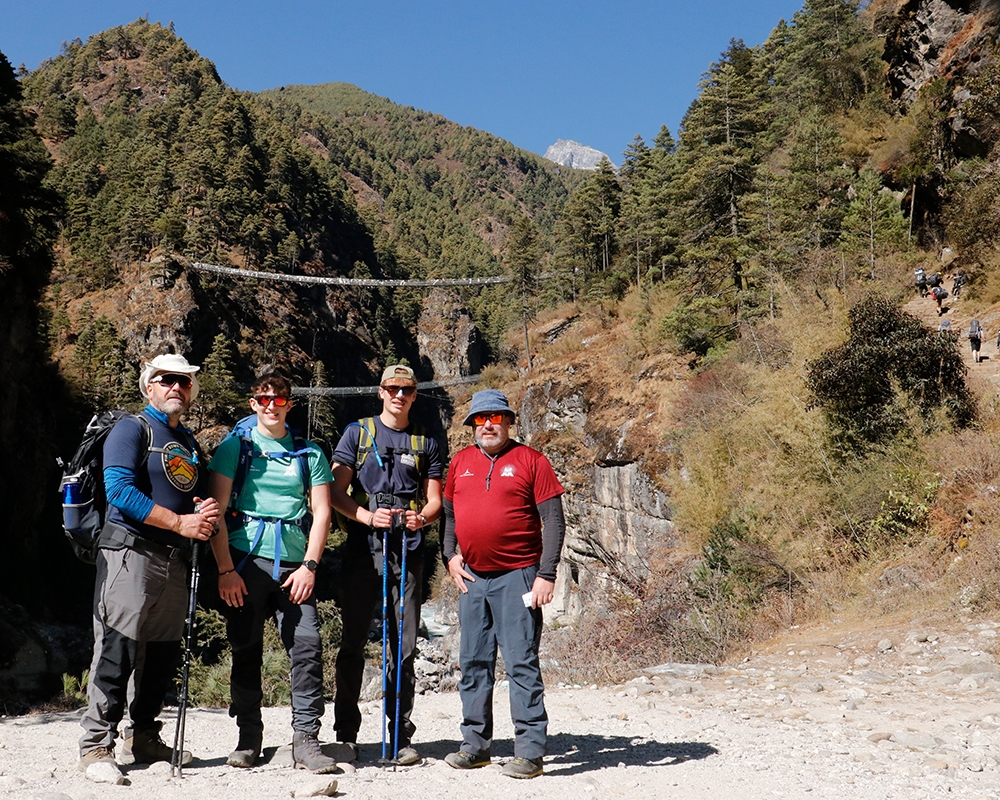
After early breakfast, you will make an early start along the bank of Dudh Koshi river, crossing the thrilling suspension bridges laden with prayer flags. It is a rigorous walk filled with steep ascents. Though the scenery is breathtaking and landscapes are magical. As we reach Manjo, we will enter inside the Sagarmatha National Park, a UNESCO World Heritage Site. The trail passes steeply with breathtaking views including the longest Hillary Suspension bridge before ascending to Namche Bazaar. 

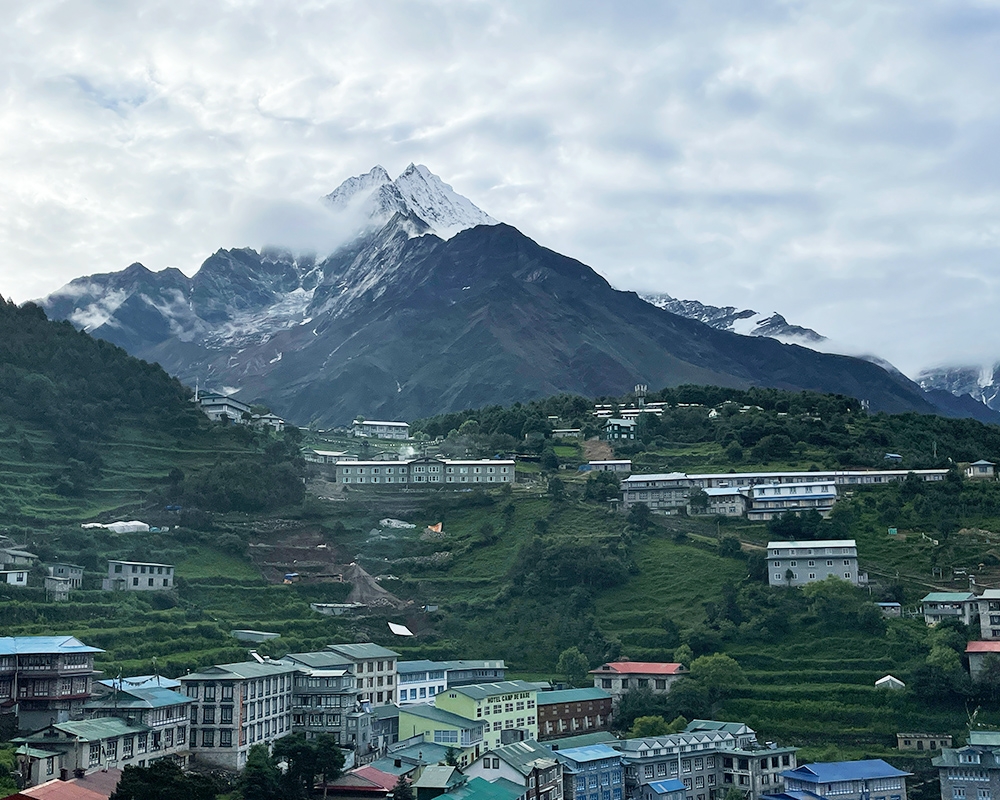
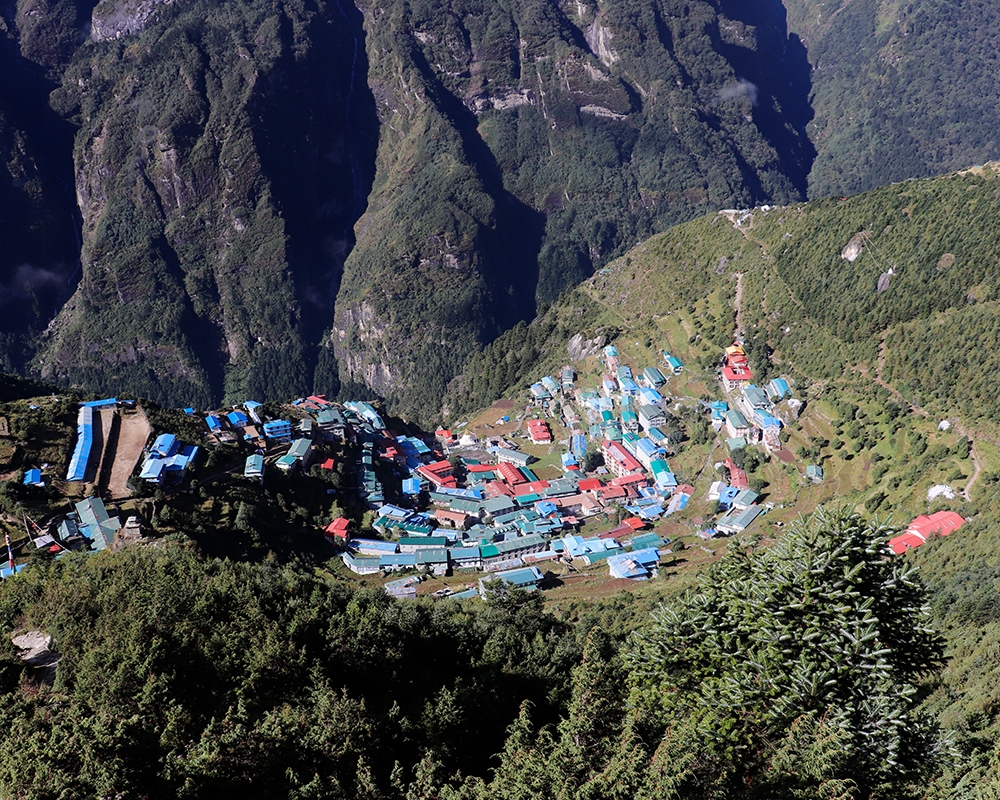
Namche Bazaar (considered the Gateway to Everest) is home to many quality restaurants, hotels, lodges, shops, money exchange services, internet cafes, and bakeries. A Sherpa settlement, the town is carved on the side of the steep mountain face. Namche is the biggest town along the Everest trail. Overnight at comfrtable teahouse run by a Sherpa Family.

  • Accommodation AD Friendship Lodge
  • MealsBreakfast, Lunch & Dinner
  • Time5-6 Hours
  • Maximum Altitude3,440 m

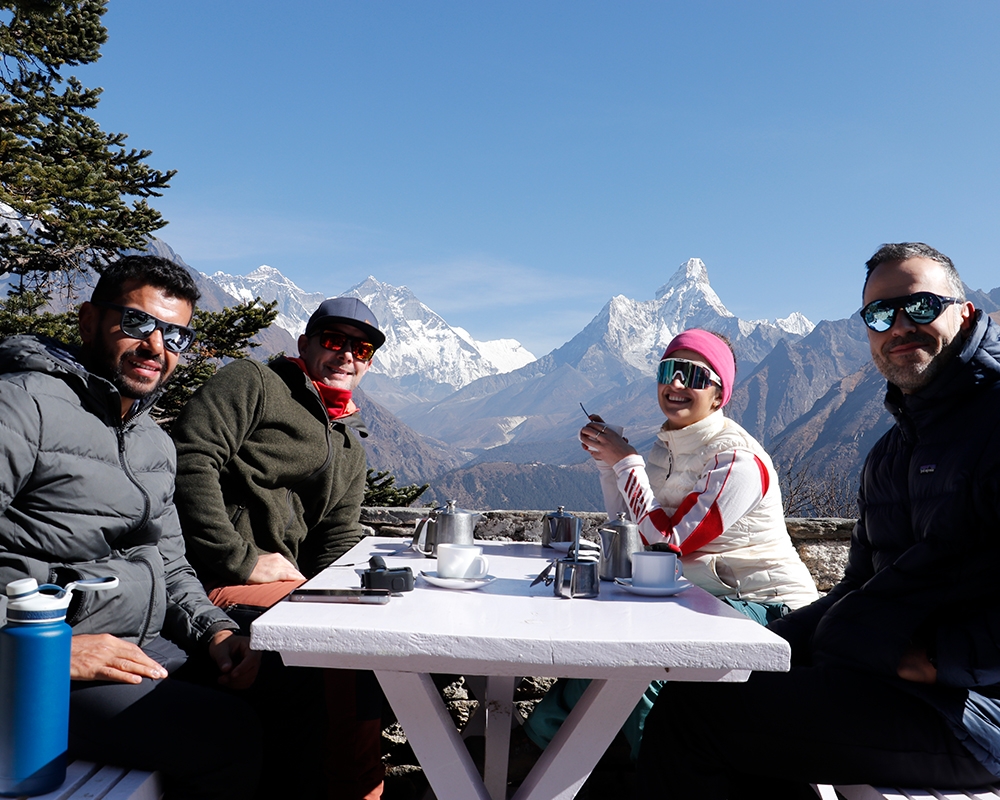
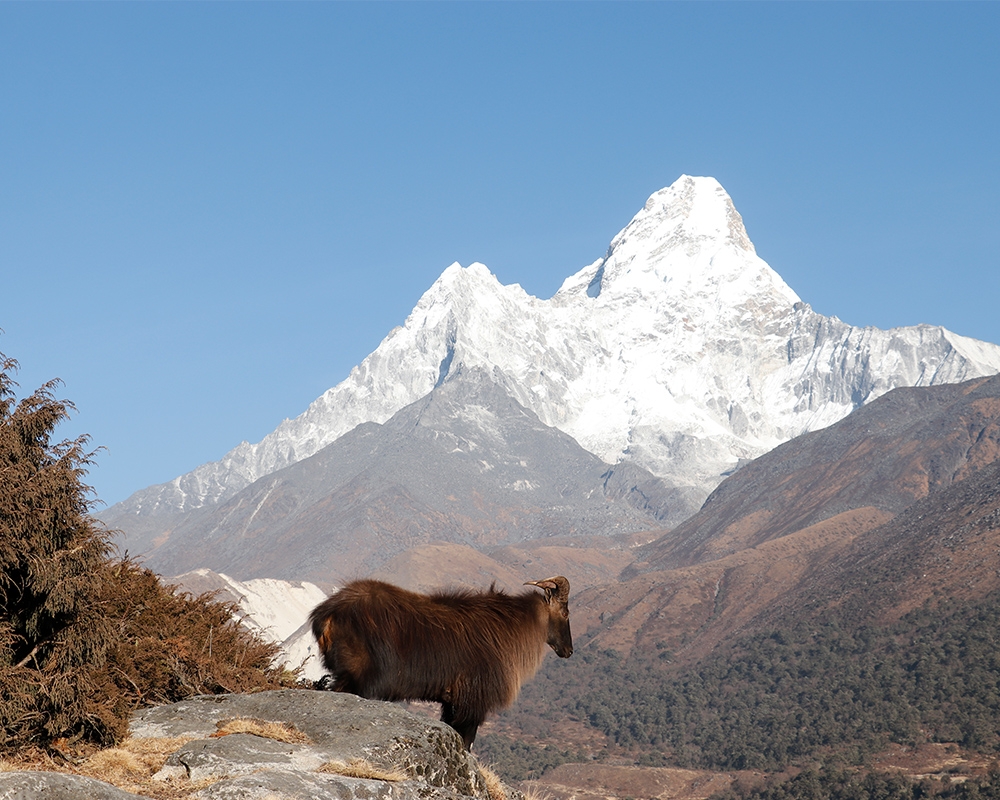
You will spend a day in Namche Bazaar to acclimatize and adjust to the thinning air. We will trek a short distance to a museum that is celebrated for its exhibits of the traditional customs of the Sherpa people. We will also hike up to the Syangboche Airport and the Everest View Hotel, one of the highest-placed hotels in the world. From this point, we can see rewarding views of the Himalayas including Mt Everest, Lhotse, Nuptse, iconic Ama Dablam, and many more snow-capped mountains in our surroundings.

  • Accommodation AD Friendahip Lodge
  • MealsBreakfast, Lunch & Dinner
  • TimeFalf Day
  • Maximum Altitude3,880 m

After having breakfast at Namche Bazaar, you'll start your hike to Phortse Thanga. The track follows the Dudh Koshi River through rhododendrons and pine forests with occasional snow-capped peaks. You'll cross multiple suspension bridges over the river and through several little communities. Phortse Thanga is a small village settlement with lodges and teahouses. Afte 5-6 hours of hiking you will finally reach your destination at Phortse Thanga. Phortse Thanga is famous for its Sherpa hospitality and culture. Phortse Thanga helps trekkers acclimatize in addition to its cultural and scenic charms. It is higher up the trail than many of the other villages, and resting here for a night or two might help hikers acclimate to the altitude before continuing to higher elevations. Overnight at Phortse Thanga with comfortable Sherpa Hospitality.

  • Accommodation Tea House
  • MealsBreakfast, Lunch & Dinner
  • Time5-6 hours
  • Maximum Altitude3,650 m

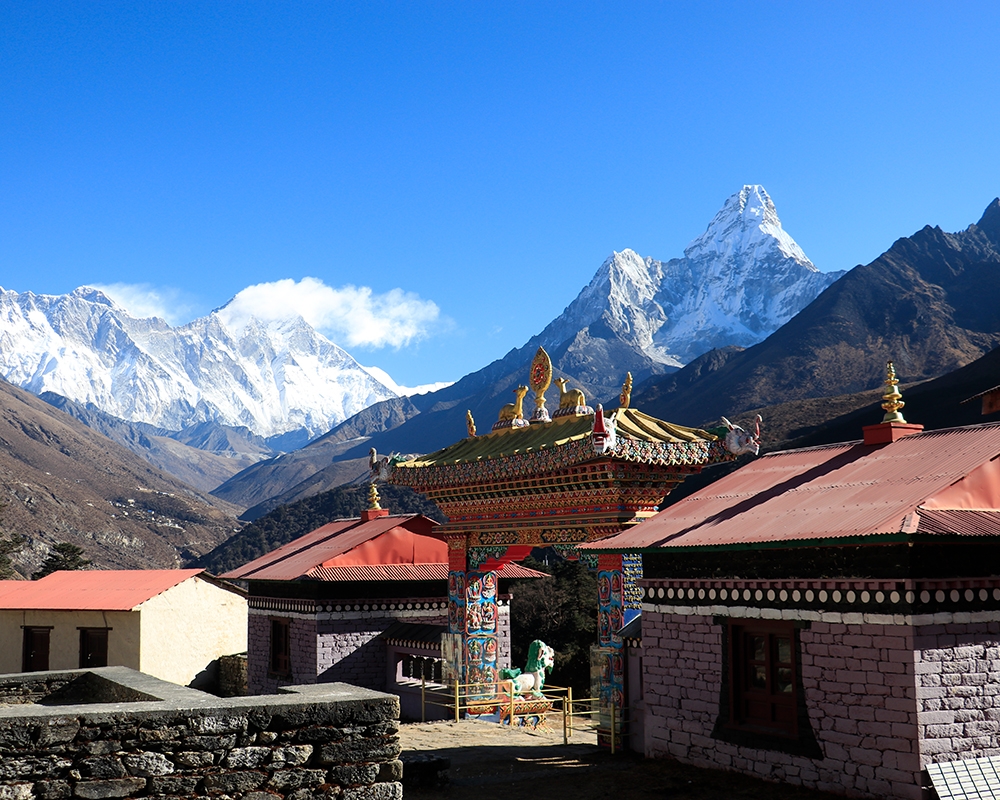
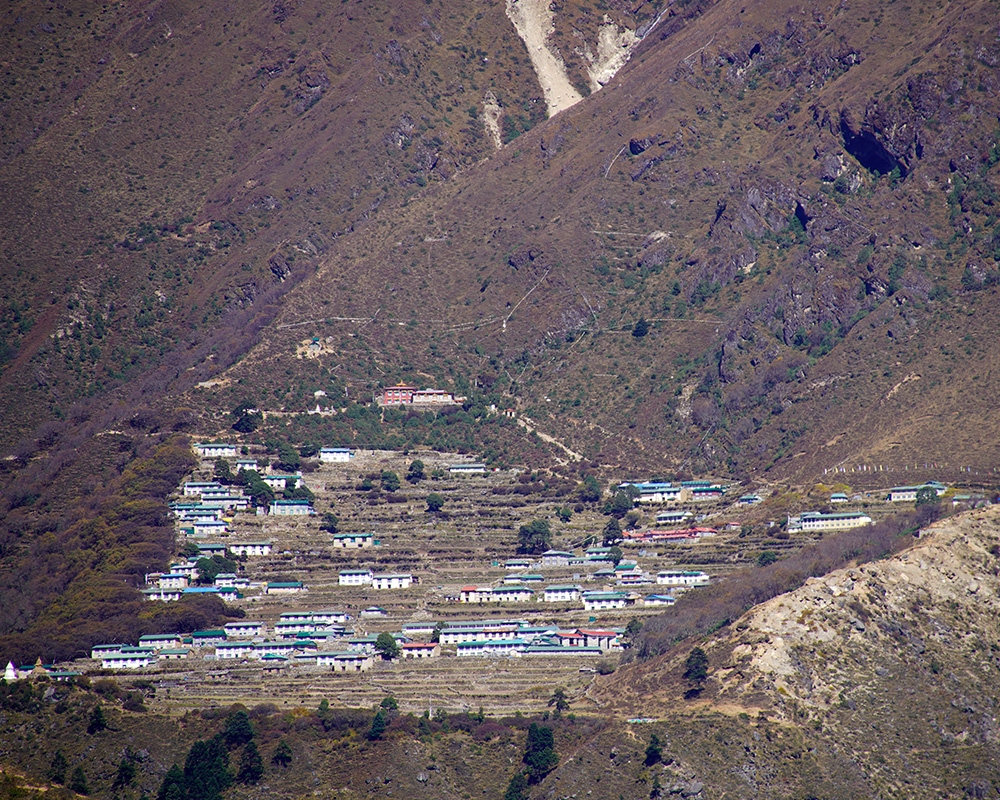
As the trail leaves Phortse Thanga it immediately begins a difficult ascent through the forest on its way to a ridge that offers breathtaking vistas of the mountains in the area. After leaving this point, the path continues to descend to the Imja Khola River, where it then traverses a suspension bridge. Before staying for Lunch at Somare, you'll cross another beautiful village Pangboche, and ancient monastry as well. After that, you will make your way up to Dingboche, a little settlement that features a handful of lodges and teahouses. Since Dingboche is a common location for acclimatization, you will remain here for an additional day to adjust to the higher elevation.

  • Accommodation Good Luck Hotel
  • MealsBreakfast, Lunch & Dinner
  • Time6-7 Hours
  • Maximum Altitude4,410 m

Acclimatization day in Dingboche. Today, you will spend a second night at Dingboche as a part of our acclimatization plan. Dingboche (or Pheriche) is the second acclimatization stop for most trekkers. On this day, you will hike to the Nangkartshang Viewpoint (5,060m) also called Nagarjun Hills, which offers stunning mountain views of Ama Dablam, Makalu, Imja Valley, and surroundings. Afterward, we'll come back to Dingboche for the rest and enjoy the remaining time before heading towards the Lobuche. 

  • Accommodation Good Luck Hotel
  • MealsBreakfast, Lunch & Dinner
  • TimeHalf Day
  • Maximum Altitude4,410 m

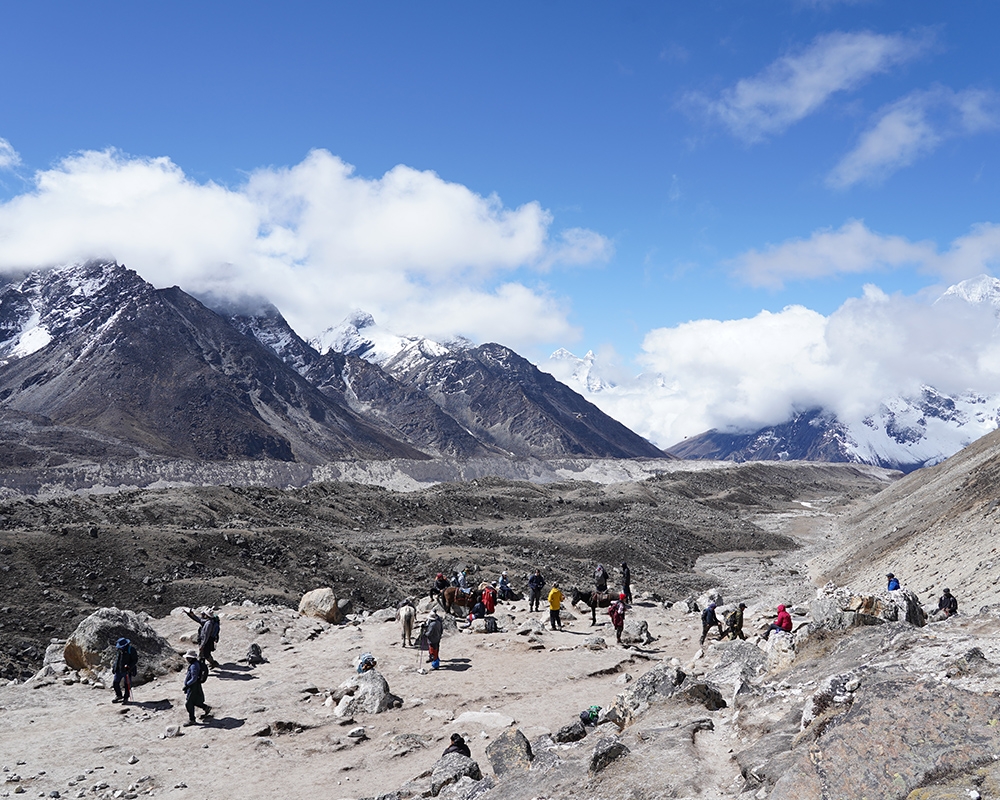
Today, the trail continues along the lateral moraine of the Khumbu Glacier and passes by stone memorials for climbers who have perished on nearby summits. We continue to climb as we are heading to the village of Lobuche which is located at the foot of the giant Lobuche peak. Some breathing problems may arise today due to altitude. After crossing the Sherpa Memorial in Thukla Pass, we'll hike towards the Lobuche village. 

  • Accommodation NEW EBC Lodge
  • MealsBreakfast, Lunch & Dinner
  • Time5-6 Hours
  • Maximum Altitude5,050 m

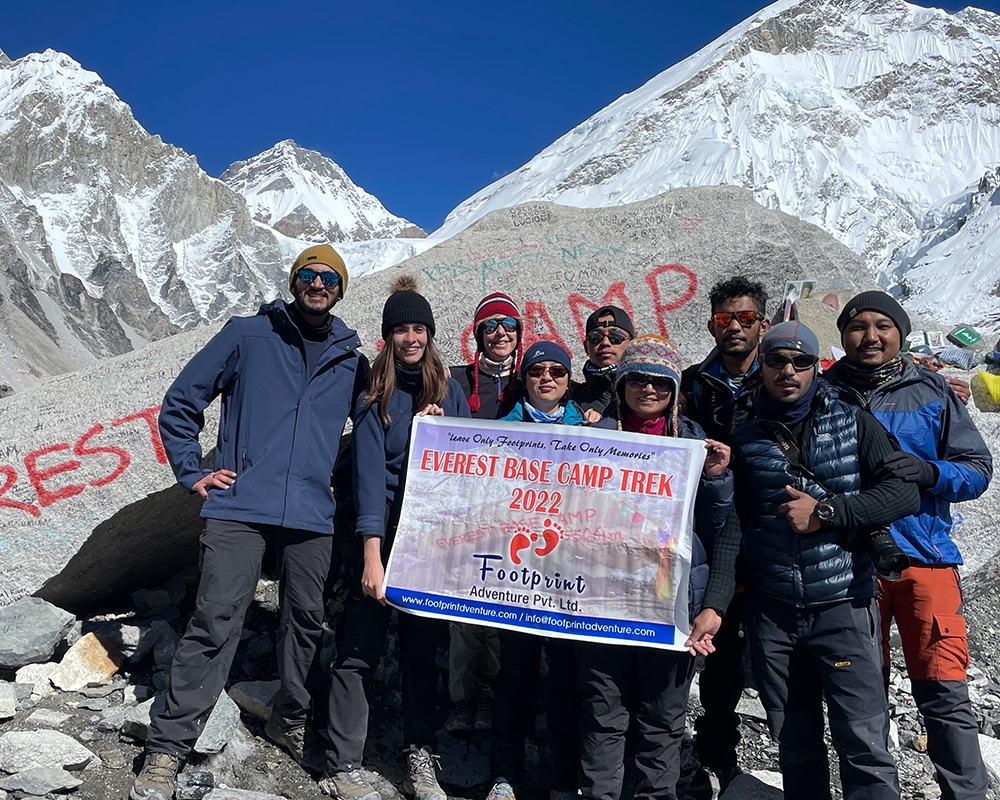
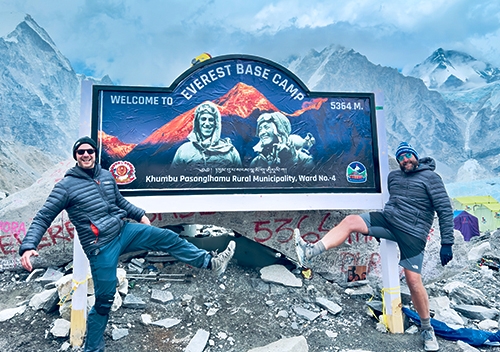
This is a big and difficult day walk, after lunch, we leave all our stuff at Gorakshep we hike along the Khumbu Glacier and up to Everest Base Camp at 5,364 m, the closest you can get to Mt. Everest without mountaineering equipment. During spring, there will likely be expedition teams about to attempt the summit. The view of the Khumbu Icefall from the Base Camp is spectacular. We will return to Gorak Shep and stay overnight at Gorakshep.

  • Accommodation Yeti Resort
  • MealsBreakfast, Lunch & Dinner
  • Time6-7 Hours
  • Maximum Altitude5,364 m

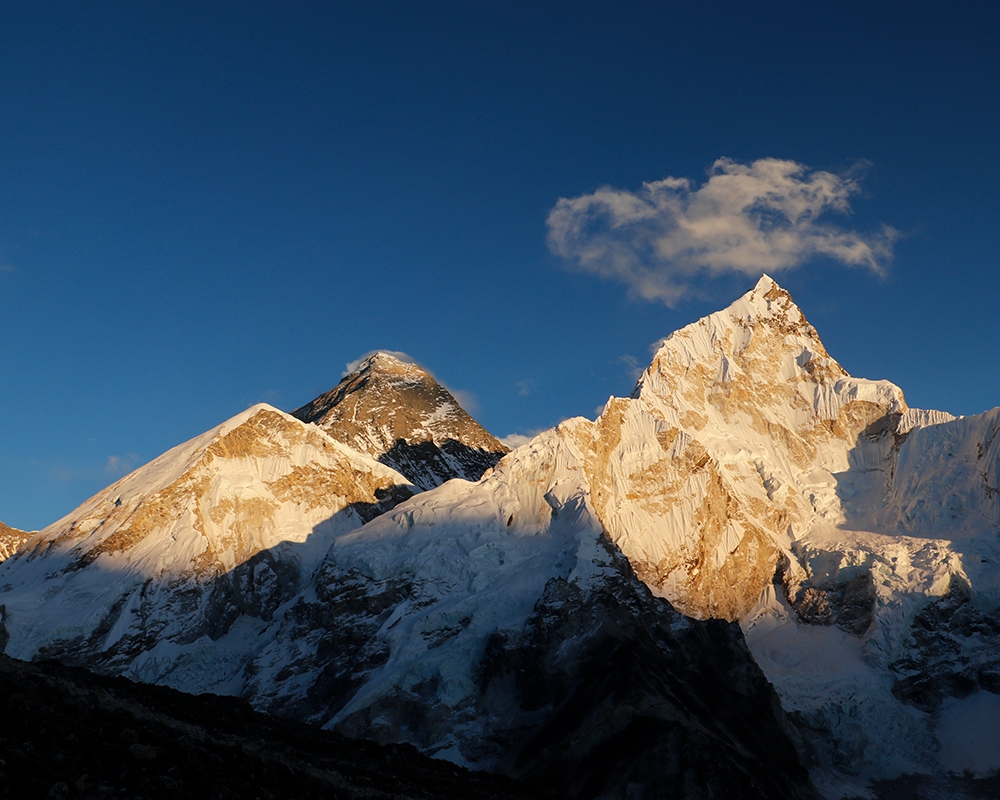
This will be one of the most difficult yet rewarding days of the trek. Most of the morning is spent climbing Kala Patthar, a small peak at 5,545 m. The ascent is demanding but the climber gets the most magnificent mountain panorama of Mt. Everest, the highest point on the planet at 8,848 m, towers directly ahead, and on all sides loom the giants such as Nuptse, Pumori, Chagatse, Lhotse, and countless others. We make a quick descent to Gorak Shep have a hot breakfast, and then trek down to Pheriche. Overnight a comfortable hotel in Pheriche. Additionally, if you can able to push 1.5 hours more, you can reach the Pangboche as well. It's comparatively warmer than staying in Pheriche.

  • Accommodation Everest Trekkers/Buddha Lodge
  • MealsBreakfast, Lunch & Dinner
  • Time7-8 Hours
  • Maximum Altitude5,545 m

Leaving the mountains behind us, our descent takes us through Pangboche and Tengboche Monastry before continuing to the town of Namche Bazaar. We arrive back in Namche in the afternoon. In the evening you'll have time to explore the market for drinks, foods and definitely, Pubs and ba would be the rewarding things for the hikers to celebrate the trip.

  • Accommodation AD Friendship Lodge
  • MealsBreakfast, Lunch & Dinner
  • Time5-6 Hours
  • Maximum Altitude3,440 m

This is our last day of trekking as we return to Lukla where the trek began. We enjoy this time to reflect on the trek as a group and the personal achievements of all those who took part. After breakfast, we trek toward the Hillary Suspension Bridge and then pass through several local villages. Our arrival in Lukla brings an evening in our last Tea House and, traditionally, a party with your trekking crew: you made it! Thanks to great teamwork and perseverance, you’ve accomplished a physical feat of which others only dream. The afternoon is free, so you can wander about, relax, and enjoy a hot shower! In the evening, have a few celebratory drinks and dance with your teammates. This is your last night on the mountain, which can be bittersweet. 

  • Accommodation Old Town Hotel
  • MealsBreakfast, Lunch & Dinner
  • Time6-7 Hours
  • Maximum Altitude2,840 m

Enjoying the last glimpse of the mountains we have recently visited, the 35-minute scenic flight takes us back to Kathmandu. We will transfer you to the respective hotel, where you'll stay. We help to book the same hotel (Kantipur Village Hotel) upon your request as well. In the meantime, you can explore Thamel, and buy souvenirs for your friends and family. 

  • Accommodation Kantipur Village Hotel
  • MealsBreakfast at Lukla
  • Time35 min flight
  • Maximum Altitude1,350 m

Our airport representative will drop you to Kathmandu Tribhuvan International Airport for your final departure from Nepal. 

  • MealsBreakfast
  • Maximum Altitude1,350 m

What's Included

  • Airport Pick up and drop by private vehicles ( both domestic and international arrivals/departures)
  • Kathmandu City Tour with certified tour guide and private transportation
  • 3x Night Hotel accommodation with breakfast in Kathmandu (Kantipur Village Hotel) or the same standard
  • Full board meals (breakfast, lunch, dinner), 3x Tea/coffee, and 1X soup per day during the trekking
  • Private vehicle transportation for drive from Kathmandu to Salleri
  • One-way return flight from Luka Village to Kathmandu or Lukla to Ramechhap Airport in peak season 
  • Best available tea house accommodations with twin sharing room during the trekking
  • Professional, experienced, certified, and English-speaking trekking guide for your entire trekking
  • A porter for the two trekkers (an extra 22 USD per day for a solo traveler)
  • Food, Accommodation, Salary, Equipment, Medicines, and insurance for trekking staff
  • All the necessary permits and entrance fees during the trekking (National Park Entrance + Municipality Entrance)
  • Welcome or Farewell dinner with a culture show program in a typical Nepali restaurant in Kathmandu
  • A medical kit is carried by our trekking guide/leader
  • Carry Me Bag for responsible waste collection throughout the trek
  • Trip completion certificate, Footprint Duffel bag, trekking map, and a T-shirt from the company. Duffel bags should be returned at the end of the trekking
  • All the government taxes and operating charges
  • Personal trekking equipment and gear
  • Nepal visa, learn more about the visa for Nepal, here
  • Your travel and rescue insurance, Helicopter rescue, and any kind of insurance-related things
  • Lunch and dinner in Kathmandu
  • Tips for guide, porter, and driver (expected)
  • Travel Insurance
  • Mineral water, soft drinks, hard drinks, laundry, and your expenses during the entire Nepal trip
  • Hot water, extra food and drinks, showers, and other personal expenses 
  • Donations for local people, hospitals, and schools (not compulsory)
  • International flight tickets 
  • City sightseeing entrance fees 
  • The rest of the expenses that are not mentioned in the cost include

Additional Info

Accommodation Options During the Everest Base Camp Trek via Salleri 

Accommodation in City 

As part of your Everest Base Camp trek via Salleri, we will accommodate you for three nights in a comfortable three-star hotel in Kathmandu on a twin-sharing basis. If you prefer more privacy, we can arrange a private room at an additional cost.

Accommodation During the Trek 

  • While trekking to Everest Base Camp from Salleri, you will spend a total of 14 nights in local teahouses. Most of your accommodations will be on a twin-sharing basis, and you will eat in common dining areas. You can expect to find basic necessities in your room, including a pillow, blanket, and mattress. We recommend you bring a sleeping bag that will keep you warm at -10 degrees Celsius. You can rent a sleeping bag in Kathmandu if you require one at an additional charge.
  • Teahouses in Phakding, Namche Bazaar, Dingboche, and Lukla provide private bathrooms, while teahouses in Salleri, Phortse, Lobuche, and Gorakshep provide shared bathrooms.
  • During peak seasons, teahouses on the Everest Base Camp via Salleri route can fill quickly, so we recommend booking in advance and staying flexible with accommodation arrangements.

Hotel Upgrade Options

If you prefer more comfort in the cities before or after your trek, you also have the option to upgrade your hotel to a higher category.

  • Upgrade to a 4-star hotel in Kathmandu - 120 USD per night pp in BB
  • Upgrade to a 5-star hotel in Kathmandu - 250 USD per night pp in BB
  • Single supplement - 300 USD per person

Transportation Details 

For the Everest Base Camp trek via Salleri, we arrange all transportation for you.

When you arrive at Tribhuvan International Airport in Kathmandu, a private vehicle will pick you up and transfer you to your hotel. The next day, we use private vehicles again for sightseeing around the Kathmandu Valley.

After that, you will travel from Kathmandu to Salleri by private vehicle. From Salleri, you will begin your Everest Base Camp trek via the Salleri route.

After completing the trek, you will fly from Lukla back to Kathmandu.

The Everest Base Camp via Salleri route is a popular option for budget travelers. Traveling by road to Salleri is more affordable than flying directly to Lukla, making this route a cost-effective way to reach Everest Base Camp.

Permits & Entrance Fees 

To trek to Everest Base Camp through Salleri, trekkers are required to obtain two permits:

  • Sagarmatha National Park Permit: NPR 3,000 for foreigners and NPR 1,500 for SAARC nationals.
  • Khumbu Pasang Lhamu Rural Municipality Permit: NPR 2,000 per person (applicable to all trekkers).

Both permits are mandatory for the Everest Base Camp via Salleri route, and we can arrange them for you before the trek begins. We also recommend carrying a few photocopies of your passport and permits, as you will need to show them at several checkpoints along the trekking route.

Internet Electricity and Phone Access on Everest Base Camp Trek

  • Most lodges from Salleri to Phakding have power outlets, and charging a phone costs $2–$3. Between Namche and Dingboche, phone charging costs $3–$5, while charging large power banks costs $6–$10. In Lobuche and Gorak Shep, electricity is limited, and charging can cost up to $10. It is recommended to bring a high-capacity power bank (20,000mAh or more).
  • Internet access is available using Everest Link prepaid cards from Phakding upwards, with 10GB costing $20–$25. Some lodges provide WiFi for $3–$7 per day, and cafes in Namche Bazaar often offer free WiFi with a purchase.
  • Mobile network coverage is mostly through Nepal Telecom (NTC), while Ncell works only at lower elevations. Signals can be unreliable at higher altitudes, and 4G is generally not available.

Meals and Dining on the Everest Base Camp Trek via Salleri

  • During the Everest Base Camp trek via Salleri, we provide full board meals as part of the package, including breakfast, lunch, and dinner. Breakfast and dinner are served at lodges, while lunch is prepared fresh along the trail at local teahouses or guesthouses. Each day during the trek, you will also receive 3 servings of tea or coffee and 1 serving of soup.
  • Typical food options include pasta, noodles, soups, fried rice, vegetables, bread, eggs, pancakes, omelets, and seasonal fruits. The most common and filling meal is Dal Bhat, which comes with free refills to give you enough energy for trekking.
  • Vegan, vegetarian, and gluten-free options are available. If you have any food allergies or dietary restrictions, please inform us in advance so we can make the necessary arrangements.

Drinking Water on Everest Base Camp Trek through Salleri

  • In lower elevations, bottled water is available for around NPR 100–250 per liter, and at higher elevations, it costs about NPR 400–500 per liter. Lodges also provide boiled water for NPR 100–300 per liter, depending on the location.
  • At higher altitudes, bottled water becomes limited and more expensive. We recommend carrying water purification tablets or a filter or relying on boiled water at lodges to ensure safe drinking water throughout the trek.

Group Leader and Crew 

  • You’ll be accompanied throughout the trek by experienced, licensed mountain guides from our team, trained in wilderness skills and first aid.
  • For groups of more than 5 people, we provide an additional assistant guide to ensure extra care and support.
  • To make your journey easier, we assign one porter for every two trekkers to help carry your gear.

Trekking Equipment 

  • It's not necessary to spend a lot of money on extra equipment and clothing before your trip to Everest base camp. The majority of these gears can be bought or rented at reasonable prices in Kathmandu. 
  • We provide a detailed packing list to ensure you have everything you need for the Everest Base Camp trek from Salleri Trek, including essential gear for various weather conditions. Don't hesitate to reach out to us if you have any questions about what to pack for the Everest Base Camp trek.

High Altitude Sickness

  • Since this trek reaches a maximum altitude of 5545m at Kalapatthar, the risk of altitude sickness is significantly higher compared to other treks in Nepal. Proper acclimatization and careful preparation are essential for a safe journey.
  • Our itinerary is designed with gradual elevation gains where possible, but trekkers should be aware that the high altitude demands both physical and mental readiness. This allows your body to adjust more naturally while you enjoy the breathtaking scenery.
  • It is crucial to understand altitude sickness and take preventive measures seriously. At such elevations, reduced oxygen levels can lead to symptoms such as headache, dizziness, nausea, shortness of breath, or fatigue. These symptoms can escalate if not managed properly.
  • The best way to stay safe is to monitor your condition closely, communicate openly with your guide, rest when needed, and descend immediately if symptoms worsen. Following these precautions helps ensure that your Everest Base Camp Trek is both safe and memorable. 

Trekking Grade

The Everest Base Camp Trek from Salleri is moderate to challenging, with the average daily hike being approximately between 5 hours and 8 hours. It is very important to have prior experience trekking in order to be adequately prepared for this trek. Being physically fit, mentally strong, and possessing an optimistic attitude will greatly aid you in completing this trek as you will be trekking for long periods of time and experiencing a rise in elevation while also adapting to high altitudes over a period of time.

Weather and Climate 

  • The weather along the Everest Base Camp Trek via Salleri is highly variable and can change rapidly, sometimes even within the same day. As altitude increases, temperatures drop significantly, especially in the mornings and at night, and conditions can become harsh. 
  • Sudden snowfall, strong winds, and cloudy conditions are common in higher regions such as Namche Bazaar, Dingboche, and Gorak Shep. A clear and sunny morning can quickly turn cold, windy, or overcast by the afternoon. Due to these changing conditions, trekkers should carry warm, layered clothing, including insulated jackets, thermal base layers, gloves, and hats. Waterproof and windproof gear is also essential to stay protected from unexpected rain or snow.

Travel Insurance

Travel insurance is essential for the Everest Base Camp Trek via Salleri. Ensure your policy covers high-altitude trekking (up to at least 5,500 m), including emergency helicopter rescue, evacuation, and medical expenses. Due to the remote nature of the route and limited medical facilities, comprehensive coverage is strongly recommended. To help you choose the right policy, refer to our guide on Travel Insurance Required for Trekking in Nepal.

Tipping

Tipping on the Everest Base Camp trekking is not mandatory, but it is an important way to acknowledge the hard work of your guide and porter, as it forms a significant part of their income. Generally, we recommend tipping 10–12% of the trek package price for your porter and 12–15% for your guide. You can adjust the amount according to the quality of service and your overall experience. Providing tips in Nepalese Rupees or a widely accepted currency like USD is recommended.

Booking and Cancellation Policy

How to Make a Booking

To secure your Everest Base Camp trek through Salleri package, we will require photocopies of each traveler's passport to make your booking. You should also provide us with a copy of your Nepal arrival flight schedule or an estimated date of arrival so we can arrange your trek package at your convenience. Finally, you can finalize your booking by paying an advance of 20% of the cost of the trek package. You can go through our entire booking and payment process and conditions so that you have a smooth experience from start to finish.

Cancellation Charges & Conditions

  • 25 or more days before departure: 20% of the total cost
  • 18–24 days before departure: 40% of the total cost
  • 10–17 days before departure: 50% of the total cost
  • Less than 10 days from trek start date: 70% of the total cost
  • Once the trek starts from Kathmandu, no refunds will be provided.

Rescheduling: You can reschedule your trek to a future date without any extra charges, as long as you notify us at least 15 days before your originally scheduled start date. 

Customized Itinerary and Trip Extensions

If there is not a suitable date for trekking departure from Kathmandu as per your time schedule, you can mention your suitable time and date for a tailored itinerary so that we can organize a great trip to the Everest Region of Nepal. In addition to the EBC trek via Salleri, we also organize trips to Everest Base Camp through the traditional Lukla Route, trekking to other regions of Nepal like Langtang,Manaslu,Annapurna, including peak climbing, Mountain flight, water rafting, jungle safari, adventure sports, City tour (Kathmandu, Pokhara or Lumbini), Day Tour, Nepal Cultural Tour, Tibet tour, Bhutan tour or India tour extension as per your time frame.

FAQs

Q1. What is the difference between normal Everest base camp trek and Everest Base Camp Trek via Salleri?

The Everest Base Camp (EBC) trek via Salleri and the regular Everest Base Camp (EBC) trek have different beginning points and itineraries. A tiny village in the Khumbu region of Nepal called Lukla serves as the starting point of the standard EBC trip. Many trekkers decide to start their expedition by taking a flight from Kathmandu to Lukla. The journey departs from Lukla and travels along a well-trodden path that passes through charming Sherpa settlements including Namche Bazaar, Tengboche, Dingboche, and Gorak Shep. Along with providing the chance to fully immerse oneself in the colorful Sherpa culture, this path delivers amazing vistas of the Himalayas, including the magnificent Mount Everest.

However, The Everest Base Camp climb through Salleri, on the other hand, follows a less-trodden path. In the Solu region of Nepal, the town of Salleri serves as the starting point for the journey. Trekkers typically travel by road from Kathmandu to Salleri, which takes longer than taking a flight to Lukla. The trek departs from the standard EBC track at Salleri and travels through the Solu region. Trekkers travel through towns and settlements including Phaplu, Nunthala, and Junbesi, which provide a unique cultural experience and an opportunity to see how the Nepalese live in the countryside. The trail eventually connects with the primary EBC trekking route at Namche Bazaar after passing through these settlements.

No, Trekkers are often hired porters by the travel agents to carry their belongings throughout the trek. By doing so, you may concentrate on meeting the physical demands of the trek and climbing without having to worry about your bag getting in the way.

Yes, you can customize the Everest Base Camp Trek via Salleri's itinerary to fit your needs and interests. You have more control over their itinerary because this path is less traveled and has more flexibility.

The itinerary can be customized by changing the number of trekking days, selecting particular villages or stops along the way, and adding extra activities or side trips. In this case, you may allocate additional time to the Solu area and spend extra days in the settlements of Junbesi or Phaplu, which provide distinctive cultural experiences and stunning views.


The Salleri route takes you around 18-19 days and 130km of trekking distance in order to complete the whole trek. This is a physically demanding trek that requires a certain level of physical and mental fitness. 

Yes, it is highly recommended to hire a guide from a certified local agency in order to guide you throughout the trek. Hiring a guide offers you an extra level of safety from different aspects throughout the trek such as altitude sickness, unknown trails and so on. Whereas, hiring a porter can be optional as long as you are willing to carry your heavy backpack during the trek. Hiring a porter can help you carry your backpack and can ease your trekking experience.

The main highlight of this trek is the 9 hours drive from Kathmandu that offers you the best roadway experience of the Sunkoshi river and the astonishing view of the Numbur Himal. Along with it, the Salleri village, Phortse Thanga and Tengboche monasteries are the major highlights that differs Salleri route from the classic Lukla route. 

Salleri serves as a regional transit and commercial hub, and it is home to various shops, restaurants, and guesthouses that cater to trekkers. Phortse Thanga is famous for its Sherpa hospitality and culture. Trekkers can stay at various guesthouses and tea houses in the village, where the Sherpa people are hospitable. And, the Tengboche Monastery is a spectacular example of traditional Himalayan architecture, with intricate wood carvings and colorful prayer flags. 

Yes, the trek's highest point is at an altitude of 5,364 m above sea level. At this level of height, there is a high chance of altitude sickness.

]If you want to tackle Everest Base camp without experiencing any difficulties related to altitude sickness, there are a few things you need to keep in mind. The following are a few tips for preventing altitude sickness during your trip to Everest Base Camp, provided by our knowledgeable guides and travel planners.

  • Slow ascent with sufficient rest and acclimatization.
  • Make sure you get enough fluids and keep hydrated.
  • Consume sufficient and balanced calories.
  • Keep clear from alcoholic beverages, cigarettes, and tobacco products for the entirety of the walk.
  • Maintain a level mind and get yourself mentally ready.
  • Train your body to handle uphill hikes 3 months before the trek by doing enough cardio or gym work.

The best time to do the Salleri route to Everest Base Camp is in spring (March–May) and autumn (September–November). The weather is often calm and dry during these months, with clear skies and great visibility. This creates excellent trekking conditions and enables breathtaking mountain views. In spring, the hills are covered in colorful rhododendron blooms, making the walk even more magnificent. Nonetheless, alpine weather can shift suddenly and unexpectedly. It's always a good idea to check the weather forecast before embarking on your journey and to be prepared for unforeseen weather circumstances.
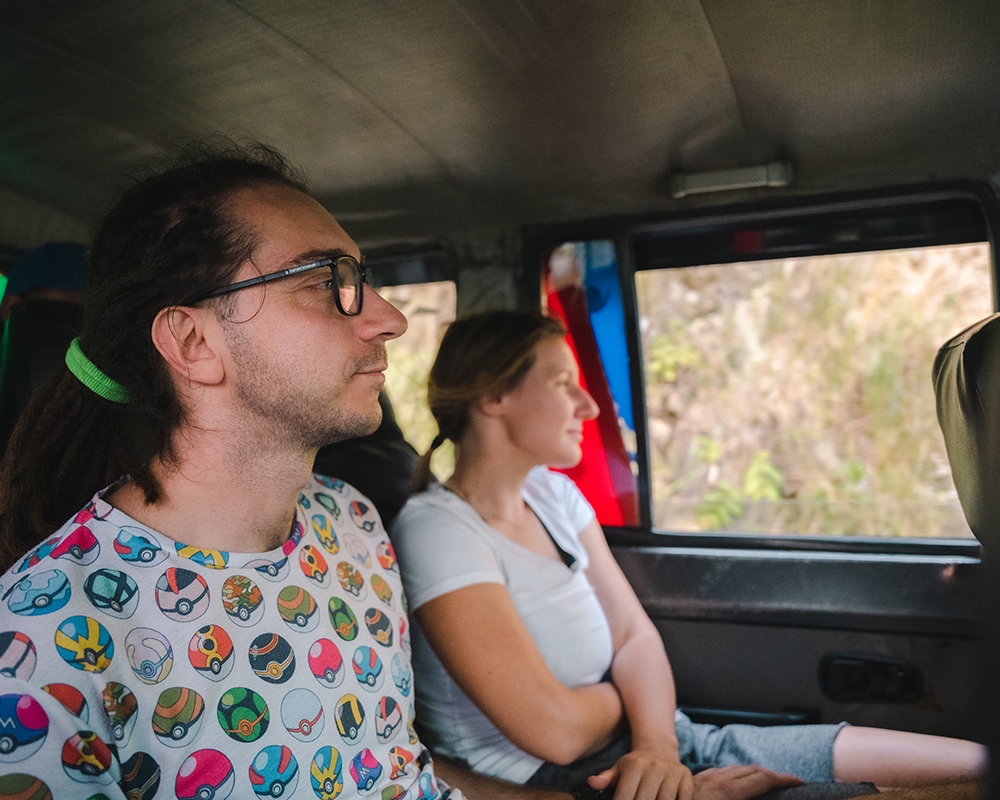
The Salleri route to EBC is a complete adventurous trekking trail for those who want to experience the EBC trek in a unique way. Here are some reasons to choose the Salleri route instead of the classic Lukla route:

  • Less crowded and least explored route to the Everest Base Camp
  • Comfortable roadway traveling experience to Salleri
  • Unexplored beauty of the region in the purest natural form
  • Best off-the-beaten trekking trail for extra adventure seekers

The Everest Base Camp trek via Salleri is considered a physically demanding journey with moderate to high difficulty. The trek includes steep and rocky terrain and multiple uphill and downhill stretches. Altitude sickness can also be a problem due to the trek's high altitude. The trek requires decent stamina and fitness. Acclimatizing to higher elevations during the trek by spending some days at key points reduces the risk of altitude sickness. It would be best to have durable and comfortable hiking shoes, warm and waterproof clothing, and a suitable backpack for the trek. For more information check the packing & equipment list for trekking in Nepal. To be sure you're well enough for the trek, consult a doctor before starting. And most importantly, your Travel insurance should cover high-altitude trekking and emergency medical evacuation. 

The Everest region has been designated as a UNESCO Heritage site and is protected by the Sagarmatha Conservation Area Project. To reach and trek in the Everest region, you need three distinct permits:

  • Sagarmatha National Park Permit: Rs. 3,000 per person
  • Pasang Lampu Rural Municipality Permit: Rs. 2,000 per person
  • TIMS (Trekkers' Information Management System ) Permit: Rs. 2,000 per person (in times of emergency, or natural calamities, TIMS will help to rescue)


Client Reviews

Tripadvisor300+Reviews
Google100+Reviews
trustpilot99+Reviews

Similar Trips

You May Also Like
Explore more