
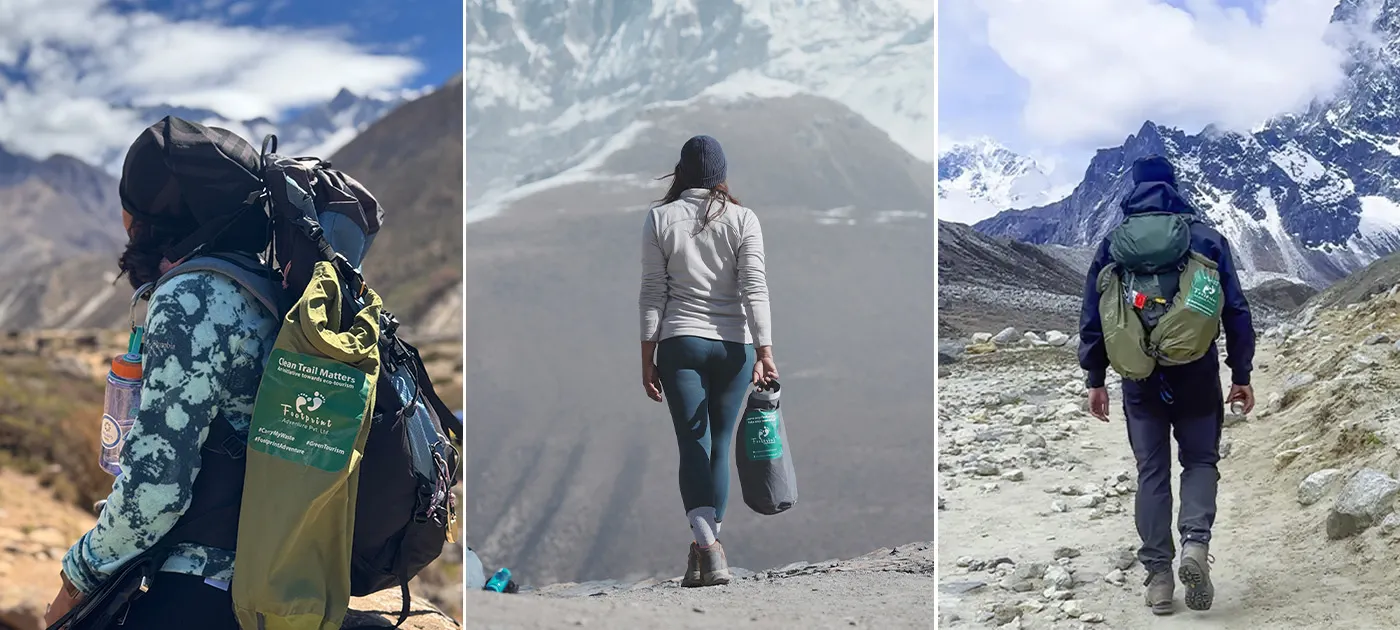
Nepal’s mountains sustain a tourism industry that supports livelihoods across some of the country’s most remote regions. Yet trekking's growth also brings a responsibility inseparable from the experience itself: managing the waste generated along the way. At Footprint Adventure, we work in these mountain environments, where waste-collection challenges become especially evident as infrastructure grows scarce with altitude. Our Carry Me Bag initiative grew from this practical concern, with the aim of helping trekkers manage their non-biodegradable waste throughout the trek.
The Challenge of Waste Management in the Mountains
Plastic packaging, food wrappers, and discarded bottles continue to place pressure on trekking routes and settlements across Nepal’s mountain regions. The problem extends beyond visible litter. In areas with limited waste collection and recycling facilities, discarded materials can remain in the environment for years, with potential consequences for local ecosystems and water sources.
As a Nepal-based trekking company, we have a direct stake in how these environments are managed. The trails we use pass through places where tourism provides essential income, while local communities bear many of the consequences when waste is handled poorly. Protecting these routes therefore requires greater attention to the material footprint of trekking, including the waste generated by everyday activities on the trail.
The Problems with Traditional Waste Management
Waste management in remote trekking regions is constrained by geography and the availability of disposal facilities. Collection services are often limited, while transporting waste from higher elevations requires considerable coordination and expense. Where appropriate facilities are unavailable, waste may be burned, buried, or abandoned, creating further environmental risks.
Collection alone does not resolve the problem. Waste must also be sorted and directed towards suitable disposal or recycling facilities. These requirements make waste prevention and collection at the point of generation particularly important. Any practical approach must account for the realities of mountain travel and the limited infrastructure available in remote settlements.
Our Sustainable Solution - "Carry Me Bag Initiative"
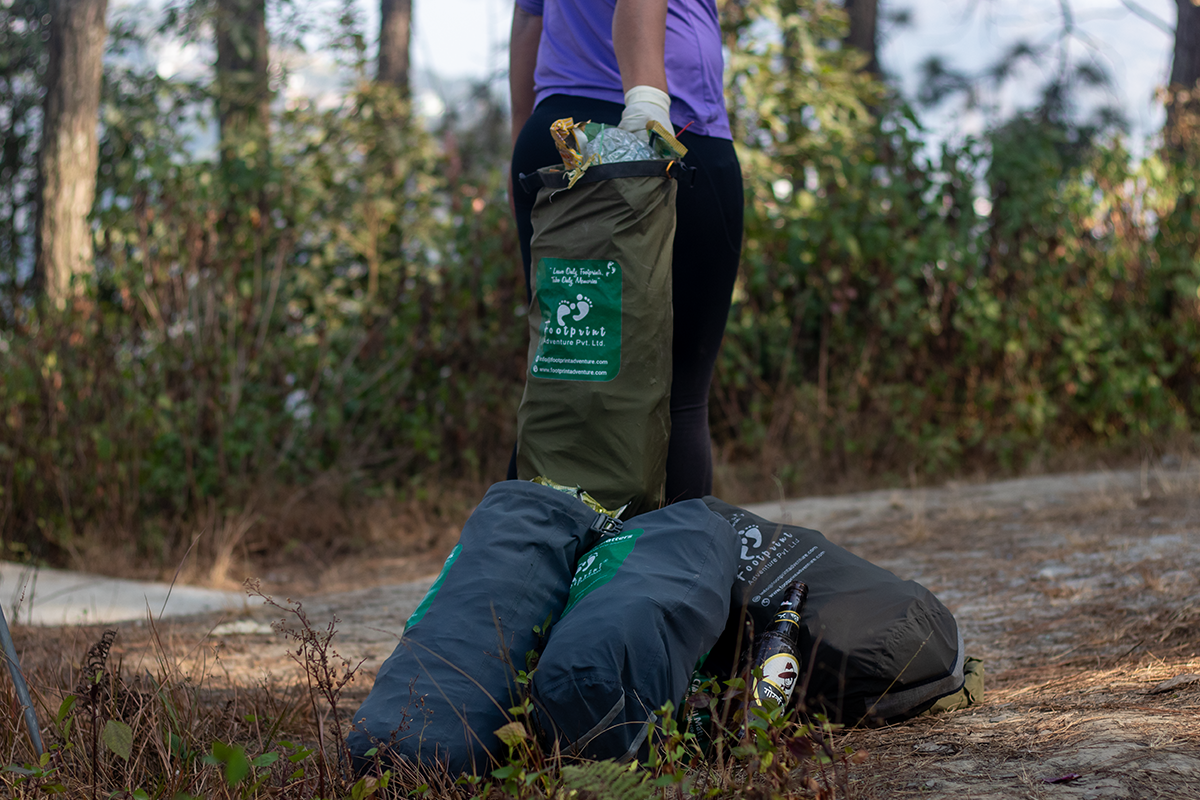
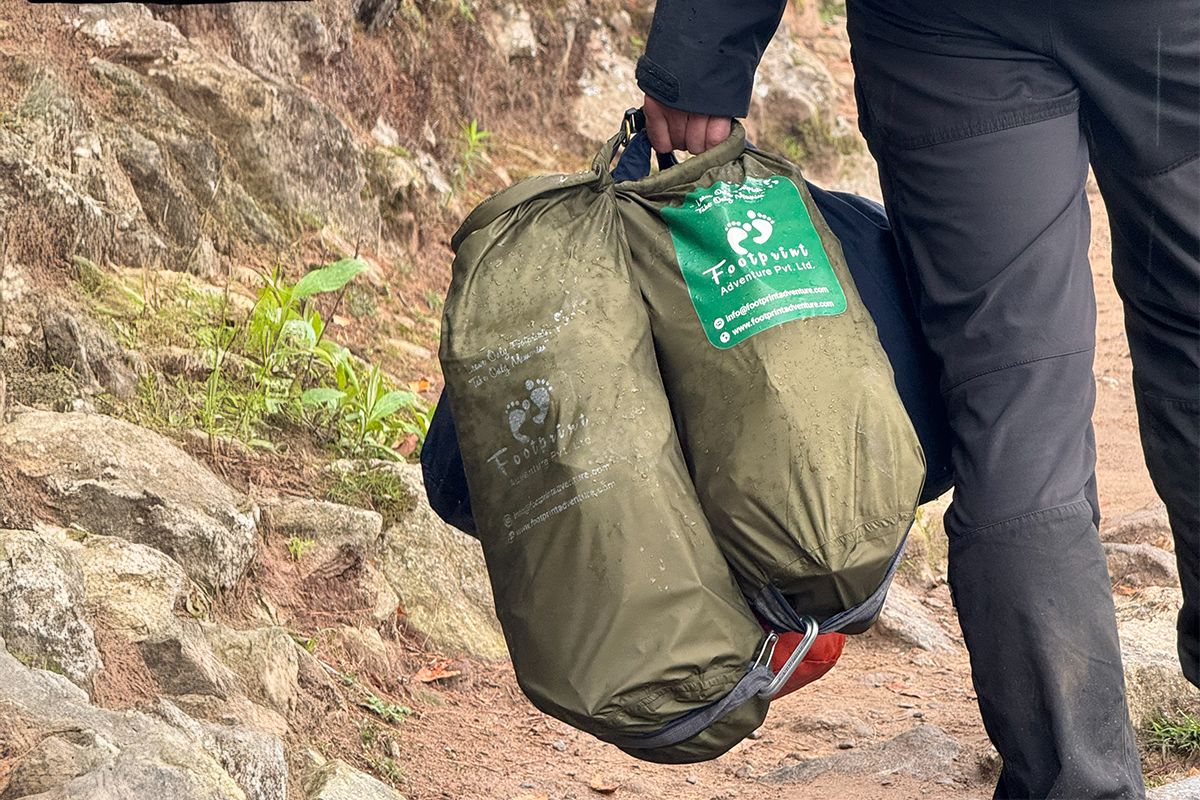
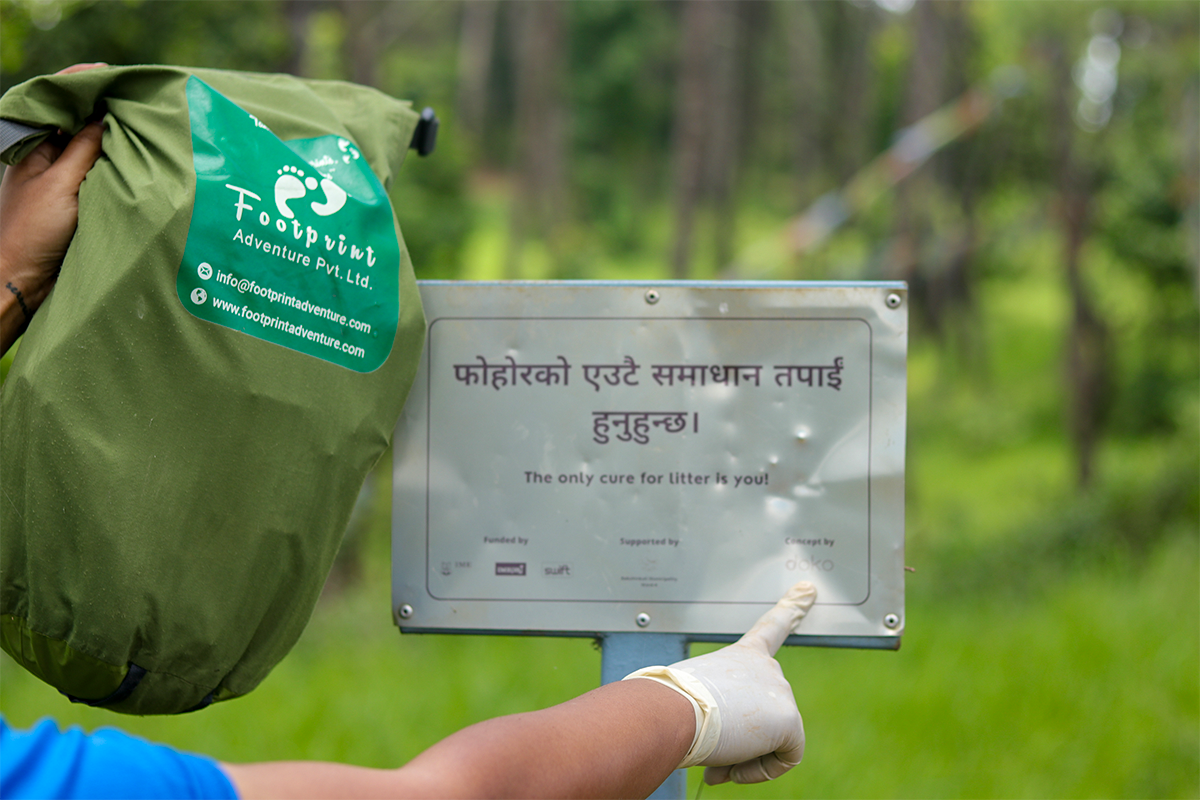
Footprint Adventure introduced the Carry Me Bag as a practical measure to encourage responsible waste collection during treks. The reusable bag gives trekkers a designated place to store non-biodegradable waste until it can be transferred to an appropriate collection point. This reduces the likelihood of small items being discarded along trails, at campsites, or near settlements.
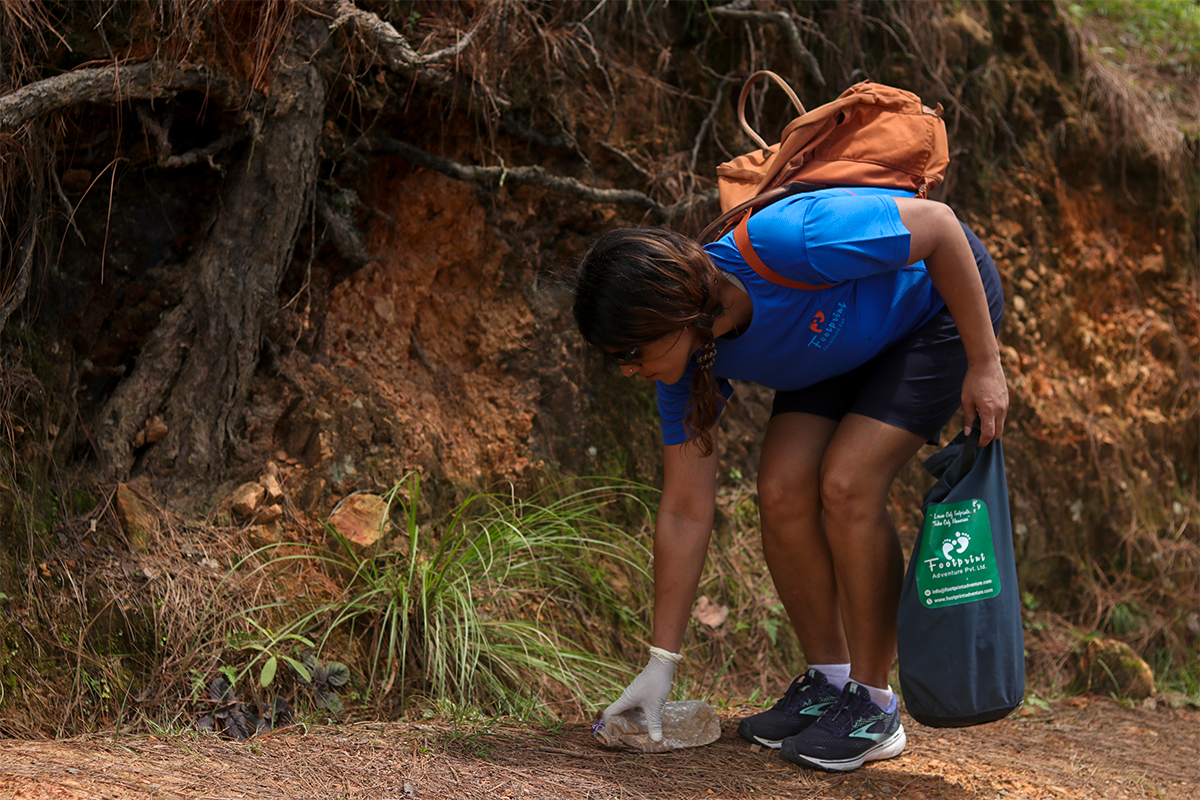
The principle behind the initiative is straightforward: waste generated during a trek should remain the responsibility of those who produce it, even when suitable disposal facilities are far away. By incorporating waste collection into the trekking experience, we aim to make responsible disposal a more consistent practice among our guests.
The Benefits of the Carry Me Bag
The Carry Me Bag has a valuable impact on the environment and travellers.
- This waste collection bag is distributed to every trekker to encourage them to be mindful about disposing of waste materials during their visit to the mountains. This significantly reduces littering and keeps the trekking trails clean.
- The Carry Me Bags ensure that plastic waste is collected and transported back to lower elevations where it can be properly segregated or disposed of in an environmentally friendly way.
- Our initiative to minimize waste and promote proper disposal with the Carry Me Bag helps protect the Himalayan ecosystem. This promotes a cleaner and healthier practice for future generations.
- The waste-carrying bag is a constant reminder for trekkers about sustainable practices during trekking in Nepal. We believe in awareness through an eco-conscious approach while exploring the Himalayas.
Footprint Adventure's Commitment to Sustainability
The Carry Me Bag initiative is just one facet of Footprint Adventure's commitment to sustainable trekking. The campaign embraces a holistic approach that includes:
- We partner with family-owned lodges and teahouses that prioritize renewable energy sources, use biodegradable products, and practice responsible waste management wherever possible.
- We emphasize sourcing food from local sources that help reduce the carbon footprint associated with transportation and support local communities.
- We discourage using single-use plastics on the treks, choosing a reusable approach whenever possible.
Our Approach to More Responsible Trekking
Our work on waste management forms part of a broader effort to examine the environmental impact of our trekking operations. We encourage the use of reusable alternatives to single-use plastics and seek to work with local lodges and teahouses that demonstrate responsible resource management. Where practical, we also prioritise locally sourced products, supporting local businesses while reducing the need for some goods to travel long distances.
Progress requires continued attention to how resources are used, how waste is handled, and how our practices affect the places in which we operate. We regard sustainability as an ongoing operational responsibility that calls for cooperation with guides, porters, local businesses, and mountain communities.
Join the Movement: Trek with Footprint Adventure
The future of trekking in Nepal depends partly on how effectively the industry addresses the environmental pressures associated with its growth. Visitors have a role in minimising the waste they generate, while trekking companies must consider how their operations contribute to the problem and what measures they can reasonably take to reduce that impact.
Footprint Adventure leads the charge towards a cleaner, greener future for the Himalayas. By choosing us for your next adventure, you're not just embarking on a thrilling trek but becoming part of the solution. Pack your bags (and your Carry Me Bag!), lace up your boots, and join Footprint Adventure on a journey combining adventure and environmental responsibility.
Together, we can conquer mountains and waste!