


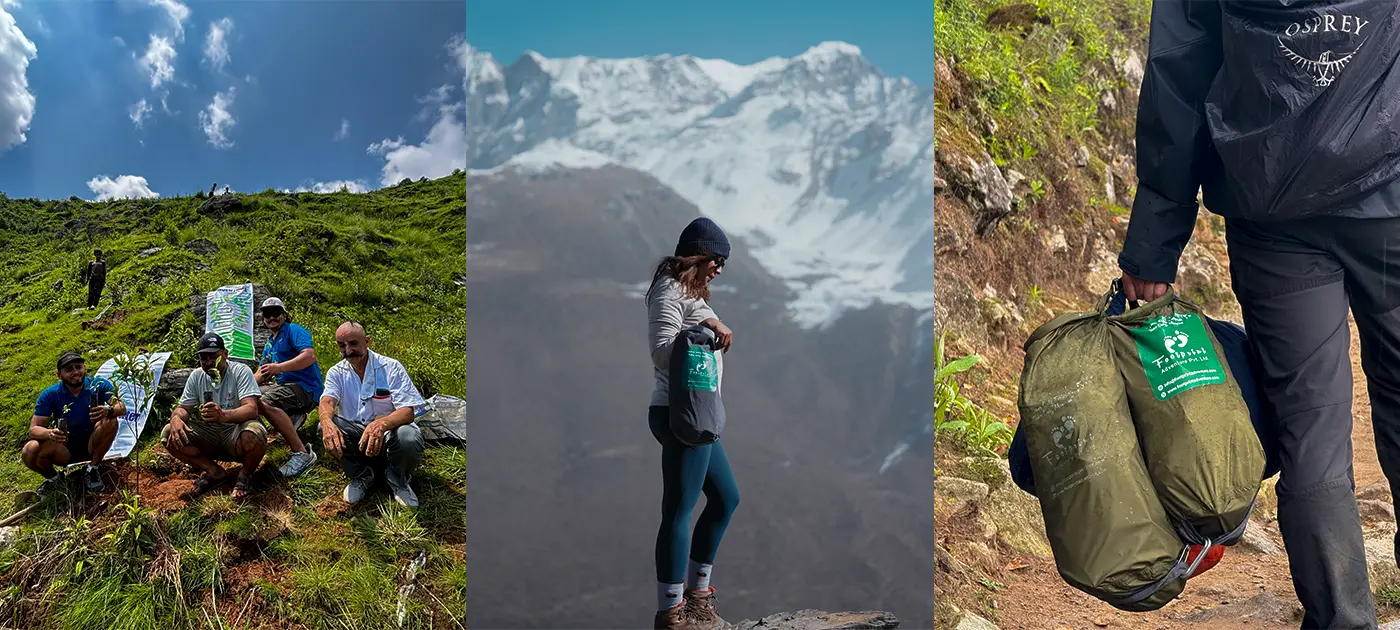
Tourism possesses great power to change places and people's lives. It supports local economies and allows travellers to experience landscapes and cultures beyond their own. But the benefits alone do not always tell the whole story. The pressure placed on nature has lasting consequences, which often go unnoticed until the damage becomes difficult to reverse. In many cases, the people living closest to these destinations are the ones who feel the impact most.
Travelers should always make a mental note that the opportunity to experience a place comes with a responsibility to help preserve it, for the people living there and for generations yet to come. Our team strongly believes that sustainable tourism means looking beyond the journey and considering the impact our travel choices and daily operations have on the places we visit. Sometimes, protecting the places and communities that make a destination special begins with simple, thoughtful daily actions.
In Nepal, this responsibility carries particular importance. Tourism is a vital part of the country's economy. Home to eight of the world's ten highest peaks, Nepal draws mountaineers, trekkers and adventurers from across the globe. Yet its appeal extends far beyond the mountains. Centuries-old traditions, Hindu and Buddhist heritage, diverse landscapes and the warmth of its communities make Nepal a destination unlike any other.
Our commitment is to be part of that effort. Through responsible adventure travel, we want to create meaningful experiences, reduce our environmental footprint, and contribute positively to the places we visit. We want travellers to return home with lasting memories, knowing that the places they experienced continue to be valued, protected and cared for.
Why is sustainable tourism important?
In Sustainability science, sustainable development means meeting today's needs without limiting the ability of future generations to meet theirs. Sustainable methods can mitigate the disruptive consequences tourism poses within the country and help motivate travelers to protect and improve the quality of nature. The core objective is to achieve equilibrium between three factors: economic growth, environmental protection and preserving social well-being. Sustainable development is important for many reasons, including:
- Preservation of cultural heritage
- Conservation of natural resources.
- A stable economic development
- Growth and development of the environment
- For a better traveling experience
How to improve sustainable tourism?
Improving sustainable tourism requires a multifaceted approach that prioritizes environmental, economic, and socio-cultural responsibility. Making a place more accessible to travelers globally and offering recreational activities in nature may deeply affect the natural environment. It's crucial to recognize that tourism does not always have a favorable economic impact on all locals and businesses, and that's when fairness towards local habitats falters. We can encourage environmentally sustainable travel by practicing the following:
- Developing the infrastructure of the destination,
- Providing opportunities for creative business ideas,
- Awareness programs on sustainable tourism,
- Sharing sustainable travel stories,
- Preventing illegal trading of local products to tourists,
- Investing in Local Ecotourism Businesses,
- Creating employment opportunities, especially for youth and women
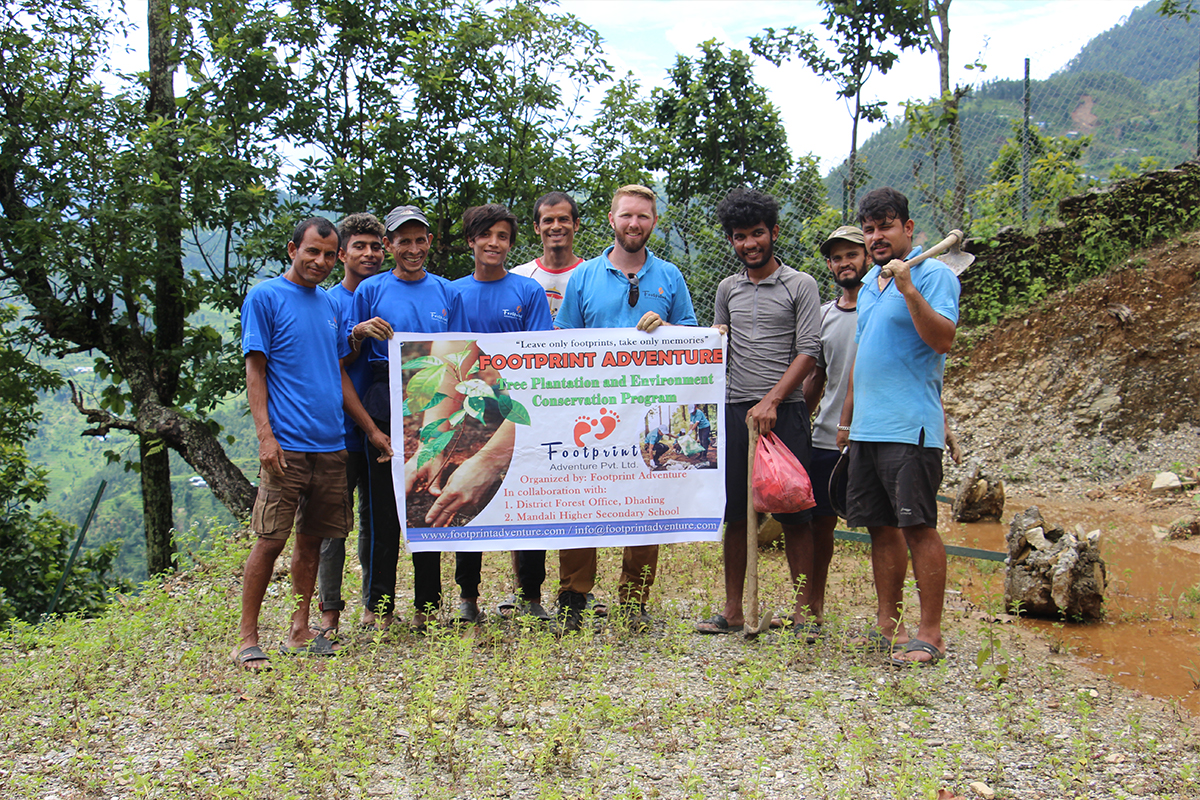
Sustainable tourism and hospitality management
Many hospitality firms have a significant negative influence on the environment through the use of electricity, water, and other resources. For instance, many hotels and restaurants use excessive amounts of energy for equipment like HVAC(Heating, ventilation, and air conditioning), lights, and gasoline. They also produce a lot of waste and make unsustainable purchases. All of these actions support irresponsible travel. Thus, in order to maintain sustainable tourism, it is essential to raise public knowledge of environmental sustainability and conserve biodiversity as well as natural heritage. The economic impact on the local communities is a crucial component of sustainable tourism. Leakage is a crucial economic concept in environmentally friendly travel. Leakage occurs when visitors spend money at a tourist attraction, but the money doesn't get distributed among the locals as intended and instead leaks out.
What are sustainable tourism duties?
There must be laws and responsibilities so there is a sustainable tourism business. These obligations support the development of the economy, geographical, and cultural heritages. The following are the key duties of sustainable tourism:
- Fostering cooperation between local communities and tourism
- Creating opportunities for accessible and inclusive tourism.
- The preservation of cultural assets and the development of genuine visitor experiences
- Defending the natural world, its resources, and its fauna
- Delivering socio-economic advantages to local residents in tourist areas.
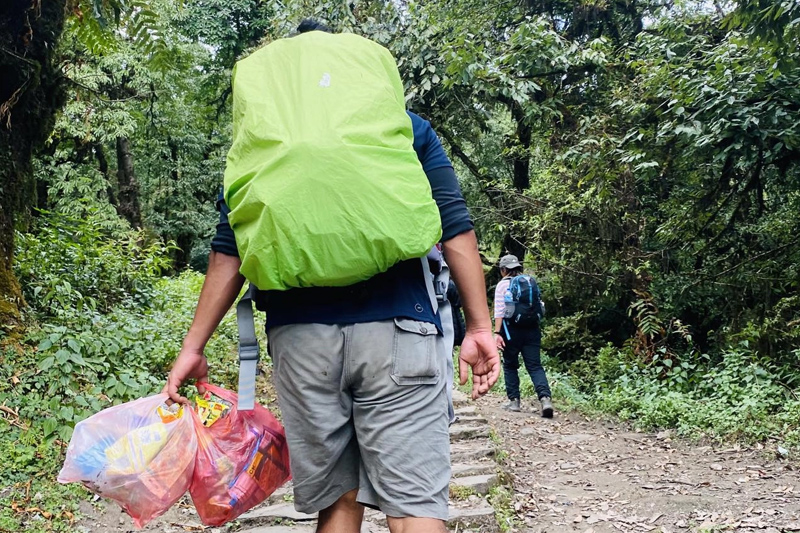
The time of Footprint Adventure has been invested in Nepal's sustainability. The trekking guides and tourists are well aware of the importance of maintaining hygienic conditions in mountainous areas. We have been participating in awareness-raising campaigns for environmentally friendly tourism. Since tourism and natural beauty are Nepal's two greatest strengths and "Growth comes from change," we need to start here to make a significant change in terms of developing rural and tourist destinations in Nepal.
Our strategy for promoting tourism is demand-driven, integrated, and all-inclusive. While considering the effects on society and the environment, it guarantees long-term economic success. We consider the inherent natural, financial, human, and intangible resources of the particular location. Footprint Adventure promotes sustainable tourist growth at all scales in accordance with this premise:
- We deliberately approach tourism-related issues and are demand-driven, resulting in immediate successes and long-term effects.
- We offer technical guidance in order to provide strategic direction for destination analysis and planning, product development and marketing, as well as organizational development.
- We offer specialized advising services that are beneficial over the long term.
- We offer comprehensive training to put the Sustainable Tourism Destination Management ideas into practice.
- We have been devoting our time and energy to improving the sanitation and cleanliness of the trekking locations.
Since sustainability is entirely focused on the next generation's ability to use the same resources that we are utilizing, sustainability and the tourism business must be actively linked with one another. Join hands with us to contribute to these long-lasting reforms. For more details about our work on sustainable tourism, please contact us at info@footprintadventure.com.