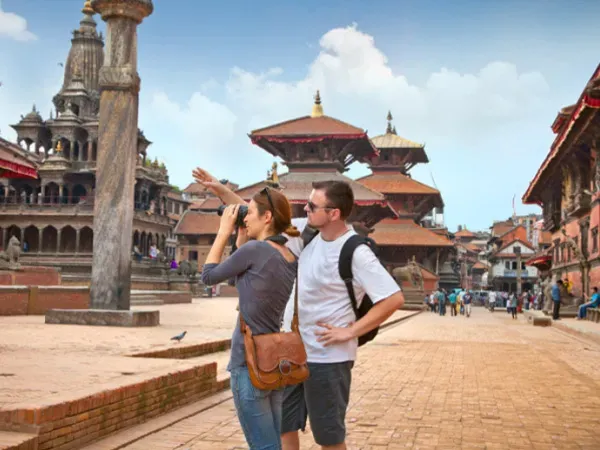
History of Bhaktapur Durbar Square
Bhaktapur Durbar Square, also known as Khwopa, is the centre of attention for its art, architecture and culture.
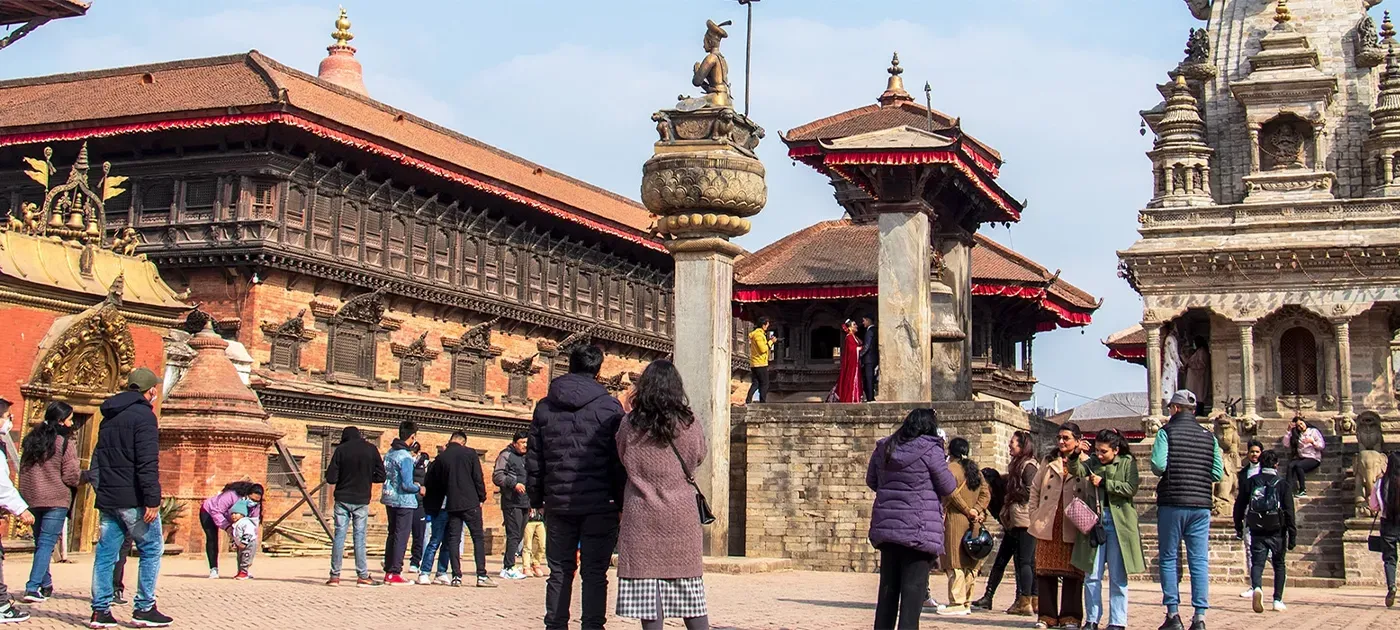
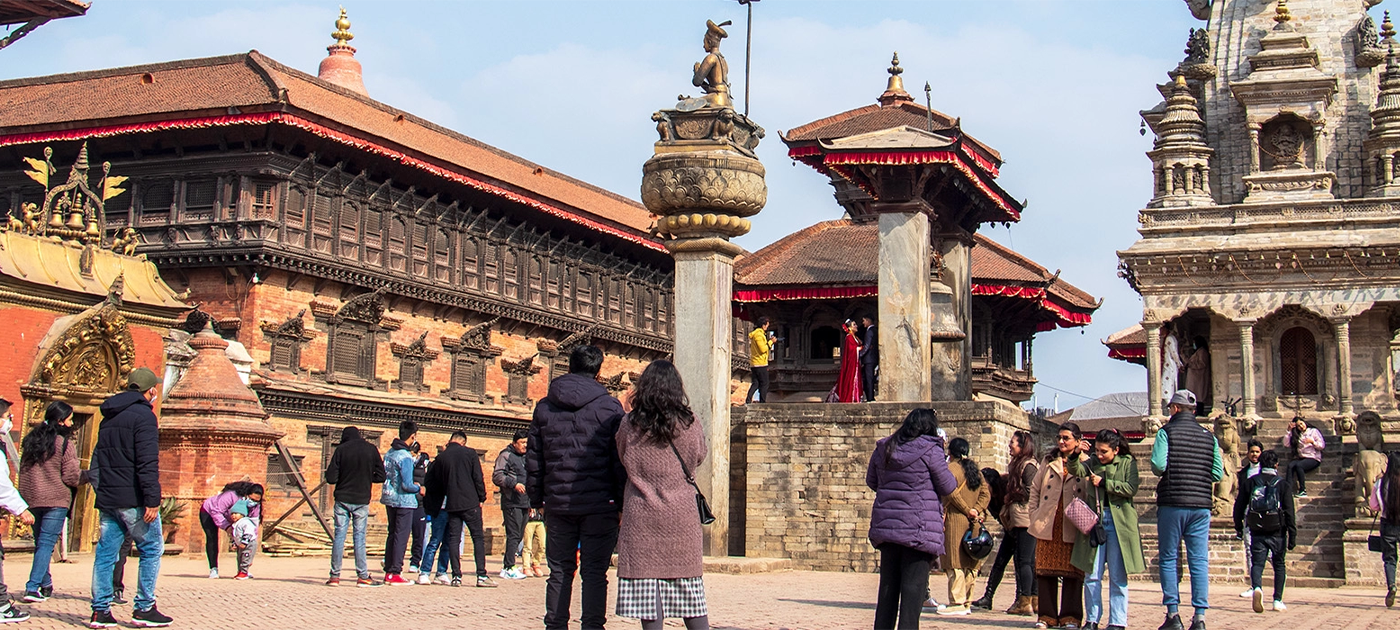
The history of Bhaktapur Durbar Square goes back hundreds of years, when Bhupatindra Malla was still the king of the Kingdom, contributing greatly to the Durbar’s beauty and its golden period. Many of the courtyards, temples and palaces you see today, like the 55 Window Palace and the Vastala Temple, were built during this period. The stunning designs and their detailing show the incredible craftsmanship of the Newar artists.
However, the history of Bhaktapur Durbar Square isn’t just about the rise but also about challenges. In the 18th century, after the unification of Nepal by Prithvi Narayan Shah, Bhaktapur lost its status as a royal capital. In today’s context, followed by the 2015 earthquake severely damaged the numerous buildings and temples in the Durbar.
Despite this, the efforts to restore the losses have made it a lot easier to preserve its original charm. Today, Bhaktapur Durbar Square still stands tall, reminding people of Nepal’s rich history, where festivals, traditions, and art are still performed just as they were centuries ago.
How to reach Bhaktapur Durbar Square?
Reaching Bhaktapur Durbar Square from Thamel or Kathmandu
By Bus/ Micro Bus
Bhaktapur Durbar Square is just 13-15 kilometres away from the centre of Kathmandu and can be easily reached by taxi, private vehicles or public buses. You can easily find a direct bus from Ratnapark or Bagbazar heading towards Bhaktapur, and through just a 10-15 minute walk, you can easily reach Bhaktapur Durbar Square.
By Taxi and Ride-Sharing apps
The quickest and most convenient way to reach the Bhaktapur Durbar Square from Thamel or Kathmandu is by taxi or ride-sharing apps. It usually takes 35-40 minutes, depending on traffic and road conditions and costs around 500-600 (prices are displayed on the app itself). In Nepal, some of the popular ride-sharing apps are:
- Pathao Nepal
- InDrive Nepal and
- Yango Nepal
You can also book a taxi or a bike through these apps, rather than offline taxis, at your convenience.
Bhaktapur Durbar Square Opening hours and Entrance fees
The Bhaktapur Durbar Square is usually open to local people and tourists from 9:00 am to 7:00 pm. Early mornings and late afternoons are the best times to visit, as there are fewer crowds and the temperature is a lot cooler.
Entrance fees:
- SAARC Nationals- NPR 500
- Foreign Nationals- NPR 1000-1800
- Children below 10- usually free
Note: The ticket generally includes access to the heritage areas around Bhaktapur, including Taumadhi Square and Pottery Square.
Major Attractions inside the Durbar
So, what makes Bhaktapur Durbar Square so special? Let’s take a look at its major attractions, each with its own wonderful history:
Vatsala Temple
Vatsala is a beautiful stone temple, dedicated to the goddess Vastala. Goddess Vastala was a motherly figure, often symbolising love, affection and protection. The temple is built in Shikhara-style architecture, truly showcasing the skills of the Newar artisans.
The 55-window Palace (Pachpanna Jhyale Durbar)
The 55-window Palace (Pachpanna Jhyale Durbar) is one of the major attractions inside the square, built by King Bhupatindra Malla. There’s a local myth that King Bhupatindra Malla built this palace for his 55 wives. However, this claim is not confirmed in history. Its true significance lies in its symbolism of Bhaktapur’s architectural greatness.
Nyatapola Temple
Nyatapola Temple is the temple that was built in 1702 AD, dedicated to the Goddess Sidhi Lakshmi, one of the powerful forms of the Goddess Lakshmi, Hindu Goddess of wealth, prosperity and good fortune. It is one of the tallest Pagoda-style temples, guarded by stone guardians at each step.
Bhairabnath Temple
Bhairabnath is the fierce and terrifying form of Lord Shiva, who took this form out of his anger. He was the god of destruction of evil, protection and justice. The Bhairabnath Temple, located in Bhaktapur, is the centre for performing rituals, festivals and ceremonies.
Golden Gate (Lun Dhoka)
Golden Gate is the main entrance to the courtyard, a definition of Newari artisans' perfect metalwork. The Golden Gate is crafted with the artistry of the gods and Goddesses. Not only does it serve as the entrance gate, but it also showcases the heritage, devotion and skill of Bhaktapur.
Nagpokhari
Located inside the Golden Gate, a beautiful, small pond with a statue of a snake (Nag) in the middle of it serves as one of the ethereal beauties of the Bhaktapur Durbar Square. During the Nag Panchami festival, when one is supposed to pray and worship a snake, Nagpokhari holds ritual importance during the process.
Bhaktapur Durbar Square Museum
Bhaktapur Museum is a must-visit attraction of Bhaktapur Durbar Square and Bhaktapur’s most important destination, where traditional Newari art, painting, wooden crafts, exhibits and history are showcased and preserved. The museum is a really interesting place to be in; you get to witness the aftermath of bad karma in painting, some fierce demons that existed centuries ago, and a series of kings' valuables, making the exploration fascinating and feel like you travelled back in time.
Things to do in Bhaktapur Durbar Square
Exploring Bhaktapur Durbar Square isn’t just about rushing from one place to another. It’s about slowing down and waiting for the city to reveal itself.
Enjoying Ju: Ju Dhau (king curd)
Ju: Ju Dhau is the famous sweet Newari yoghurt of Bhaktapur, served as a dessert in a traditional clay pot.
Walk around the pottery square
Walk through the local courtyards with clay pots drying in the sun. Watch potters prepare divine pieces with their hands, and try making one with your own hands. Walk through the local courtyards with clay pots drying in the sun.
Relaxing on Temple Steps
Relaxing on temple steps is one of the most relaxing things you can do in Bhaktapur Durbar Square. It is more like taking a pause and feeling the life around you rather than an activity. Watch passersby, enjoy the sunset, and just be there.
Experience Festivals (if time matches) & Photography
Bhaktapur Durbar Square is a photogenic little chaos with its detailed wood architecture and artwork. The sunset there is ethereal, perfect for your photography. However, some places, like the Nagpokhari, do not allow taking pictures.
Note: Do look out for no-photography signs or ask the locals in case of confusion.
FAQ’s
Do foreigners need an entry ticket?
Yes, foreigners do need an entry ticket. You’ll easily find a ticket booth at the main entrance gate of the Durbar.
Is Photography allowed?
Yes, photography is allowed in most of the places; however, in some, you have to be cautious and look out for any “No Photography " signs. It's always great to ask the staff or local people for help in case of confusion.
Is the distance walkable?
Yes, the Bhaktapur Durbar Square is best explored on foot. It is walkable.
Only 1-2 hours of your time is required to explore its beauty.
Note: Wear comfortable shoes, apply sunscreen, and wear sunglasses.
Do I need a guide?
Not necessary, but if you want to acquire in-depth historical knowledge of temples and cultural history, guides are helpful.