Nepal is a homeland of numerous exotic wildlife and biodiversity. A small country with diverse landscapes, geography, and climatic zones that offer so much rare and vulnerable wildlife across the country. Everest Region, especially during the Everest Base Camp Trek, the trail is extremely blessed with rich natural beauty, wildlife, and biodiversity. Everest Region has a few interesting wildlife species, from the extremely rare snow leopard to the colorful Danphe. While trekking in the Everest Region, encountering those animals is not easy during the peak trekking season. If you trek in the off-season, such as the winter EBC trek, post-monsoon EBC trek, and pre-spring winter trek, then there may be more chances.
At high altitudes and extreme climates, very little human life is possible. Likewise, the Everest region is also inhabited by a few rare mammals, birds, and reptiles. Because of this region, both the Nepal government and UNESCO World Heritage Sites in Nepal have listed this region as the protected "Sagarmatha National Park," which is also included in UNESCO World Natural Sites. The Everest Region is home to rare animals like the snow leopard, Himalayan Tahr, musk deer, clouded leopard, red panda, and wild yak, which are the major highlights of Sagarmatha National Park. From this list, the snow leopard and red panda are endangered and exotic species in the world. These animals have thick fur and skin, which helps protect them from extreme climates and temperatures. Some other popular animals, like blue sheep, pikas, and Tibetan gazelles, are always seen at high altitudes. In the lower belt of the Everest Base Camp trek, such as Lukla, Phakding, and Namche Bazaar, there is a dense forest where you’ll get a chance to experience a wide range of wildlife. In this blog, we tried to explain some of the most popular and exotic wildlife found during your Everest Base Camp trek.
Himalayan Tahr
The most abundant and commonly seen animal while trekking in Everest Base Camp is the Himalayan Tahr, which is found in the altitude range from 2,800 m to 4,200 m. This is commonly called a mountain goat as well. They have thick, reddish wool coats and backwards-curved horns. They can easily adapt to the harsh weather of the mountain, as you can see them in a big group near Pangboche, Dole, Somare, Namche, and other villages. The male has a big beard and a bigger body size.
Musk Deer
This is another attraction of the Everest Base Camp trek, which is mostly seen in the terrain of Kyanjuma village, Debuche village, Tengboche Monastery, Phortse, and Thame village. The white-bellied deer is listed on the IUCN Endangered Animals List. The musk deer are usually shy with humans and hide in the dense green forest of rhododendrons. In another season, they mostly graze a bit far from the villages and human settlements, whereas during the winter season, they come out in open spaces for sunlight. This exotic animal is one of the most exciting things to do while trekking in the Everest region.
Red Panda
The red panda is the most exciting and wonderful endangered creature, which is only found in Nepal and especially found in the lower Himalayan belt of Nepal. The bamboo eater has also been listed as an IUCN threatened species in the world, as its numbers are getting fewer every day. The red panda is a shy, cryptic, and elusive animal that is legally protected in most of the conservation areas and national parks in Nepal. Jhorsalle, Phakding, and Manjo are the most likely habitats of the Red pandas in the Everest Region.
Snow Leopard
The most exotic creatures of the mountain, which is also called the “Ghost of the Mountains." The deities of the high mountains are the rare and elusive small, shy cats that are found around the high altitudes of the Everest Region. The snow leopard is well adapted to the extreme weather and cold. They are rare to see, as they hardly come near the human-settled areas and trails where people pass. The snow leopard is also listed in the IUCN Threatened Species and is mostly seen in the Gokyo Lakes trek sides and Thame village. But, sometimes, if you are lucky enough, you can encounter these exotic creatures.
Mountain Yak
Mountain yaks are another name for the Himalayas, and especially in your Everest Base Camp trek, yaks are the most cherished mammals across the trails. These animals are born to survive and live in high altitudes and in extreme climates. These animals can be used as a means of transportation in the mountain region, and their hair can be used to make different kinds of warm clothes and duvets. Their horns can be used to make decorations in the home, and their tails can be used in different religious things. The milk can be used to make cheese and butter also. Besides this, at high altitudes, the houses and hotels used their dung as fuel to cook the food and make the dining room warm. After Namche Tunga onwards, you can see numerous yaks grazing in different valleys across the Everest Base Camp trek. Nak is commonly called the female of the yak also.
Himalayan Monal
The Everest Region is the home of the Himalayan Monal, which is commonly called "Danphe." Danphe is also the national bird of Nepal. This colorful bird is normally found at an altitude of 2100 m to 4500 m. During the autumn season, you can easily see them on the way from Namche Bazaar to Kyanjuma village, Tengboche, Dole, and Thame village in the Everest Region. They are normally spotted in sunny parts of the mountain region, where they come to graze and take warmth. They normally descend to lower altitudes when winter occurs.
Golden Eagle
Another beautiful creature of the mountain is primarily called the tiger of the bird kingdom, which is a widely distributed species of eagle. The giant, dark brown bird makes its own hunting territory like a popular Bengal tiger. Golden eagles are regarded with great mystic reverence in some ancient tribal cultures. While trekking in Everest Base Camp, you can see golden eagles at Namche, Tengboche, Pangboche, Pheriche, and Thame, and sometimes in the Gokyo Valley also.
Tibetan Snowcock
The non-migratory high-altitude bird with a greyish head and a white crescent patch behind the eye and a white underside is another attraction of the Everest Base Camp Trek in the Khumbu region. During late autumn and early spring, you can easily find them near the trekking trails of Dingboche, Lobuche, Pheriche, and Dzongla. These birds are not shy like other birds; if you feed them with dry nuts and other edible foods, they can easily come near you. They usually graze near the human settlements, tea houses, and lodges. They are capable of living in high altitudes and extreme weather conditions.
Blood Pleasant
Another colorful bird that is mostly found between the elevation range from 2800 m to 4000 m in the Everest region is another cherished thing while trekking in the Khumbu region. The blood in its name comes from the fact that its face, eye, and tail are crimson in color with a short-tailed, beautiful bird. They are normally seen in the forests of Tengboche, Namche, Phortse, and Dole in the Everest region trekking.
Final Thoughts
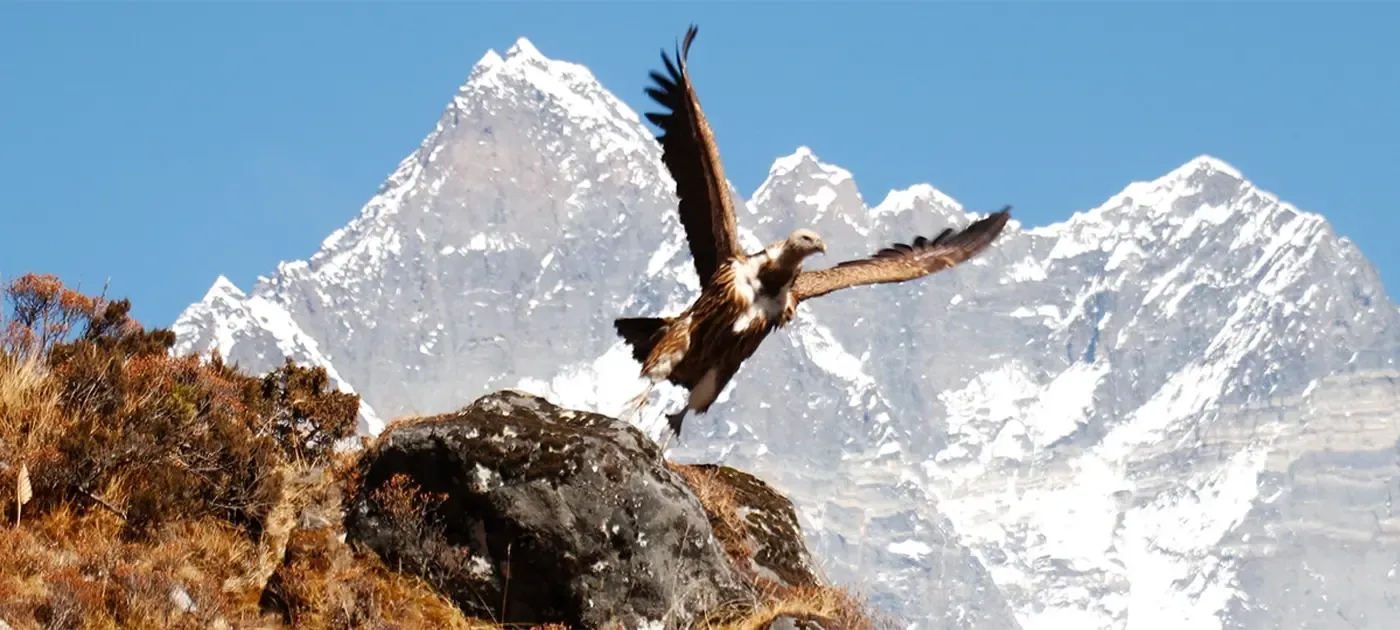
The Everest region is home to a remarkable variety of wildlife, making the Everest Base Camp trek more than just a journey through mountains. Along the trail, trekkers may encounter Himalayan black bears, musk deer, Himalayan marmots, pikas, mountain weasels, blue sheep, and various birds, including griffon vultures. These animals, together with the region's snow-capped peaks, diverse landscapes, and rich Sherpa culture, make the Everest region a fascinating destination for nature and wildlife lovers.
If you are planning to explore the natural beauty and wildlife of the Everest region, Contact Footprint Adventure to discuss your Everest Base Camp trek, get expert guidance, and explore available trekking packages. Let us help you plan a memorable Himalayan adventure.
Frequently Asked Questions
What animals can you see during the Everest Base Camp trek?
During the Everest Base Camp trek, you can see Himalayan tahr, musk deer, red pandas, snow leopards, blue sheep, Himalayan marmots, pikas, and mountain yaks. The Everest region also has diverse bird species, such as the Himalayan monal, golden eagle, and Tibetan snowcock.
Can you see snow leopards during the Everest Base Camp trek?
Spotting a snow leopard during the Everest Base Camp trek is extremely rare because these shy and elusive animals inhabit remote mountain areas and usually stay away from trekking trails and human settlements.
What is the best time to see wildlife in the Everest region?
Spring (March to May) and autumn (September to November) are popular seasons for wildlife observation in the Everest region. Clear weather, favorable trekking conditions, and better visibility can make it easier to spot animals and birds along the trails.
Where can you see wildlife during the Everest Base Camp trek?
You can spot wildlife in different parts of the Everest region, particularly around forested areas, alpine meadows, and rocky mountain slopes. Areas around Phakding, Namche Bazaar, Tengboche, and Phortse provide opportunities to observe different animals and bird species in their natural habitats.
Is Sagarmatha National Park home to endangered wildlife?
Yes, Sagarmatha National Park protects several rare and threatened wildlife species, including snow leopards and musk deer. Its forests, alpine meadows, and high-altitude landscapes provide important habitats for diverse Himalayan mammals and birds.